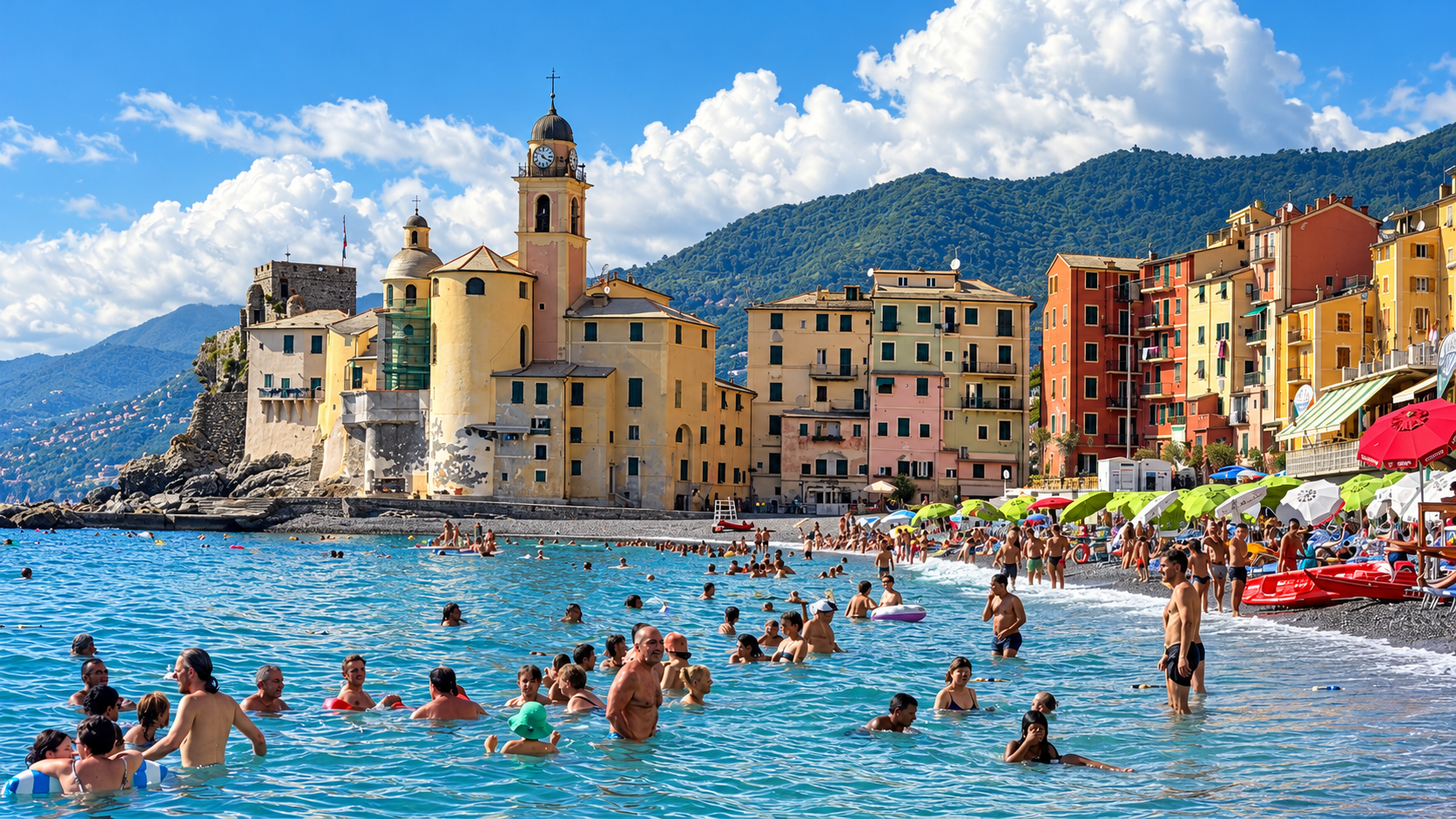
For the month of September, after escaping Dante's Inferno in Florence, the heat can be intense, especially during the month of August. I packed up myself and Mortie, my French bulldog, and we decided it was time to visit the sea and cool down. Not far from Florence, the Italian Riviera sparkles and entices many to come explore. Whether it be the sea, the charming painted village cliffside towns, beautiful hikes that have you wandering alongside the cliffs that weave through olive groves and vineyards, the Genovese coveted pesto sauce, Basilico Genovese DOP (Genovese Basil, Protected Designation of Origin), or all of the above. I will say all of the above brought me here, but I wanted something different than the familiarity of Cinque Terre. This is where I found the town of Camogli.
Escaping Florence’s summer heat, Mortie and I found our way to Camogli, where pastel houses overlook fishing boats and afternoons slip by between sea swims and glasses of Vermentino. Come along for molten cheese focaccia, hillside walks, and the quiet pleasure of losing track of time on the Italian Riviera.
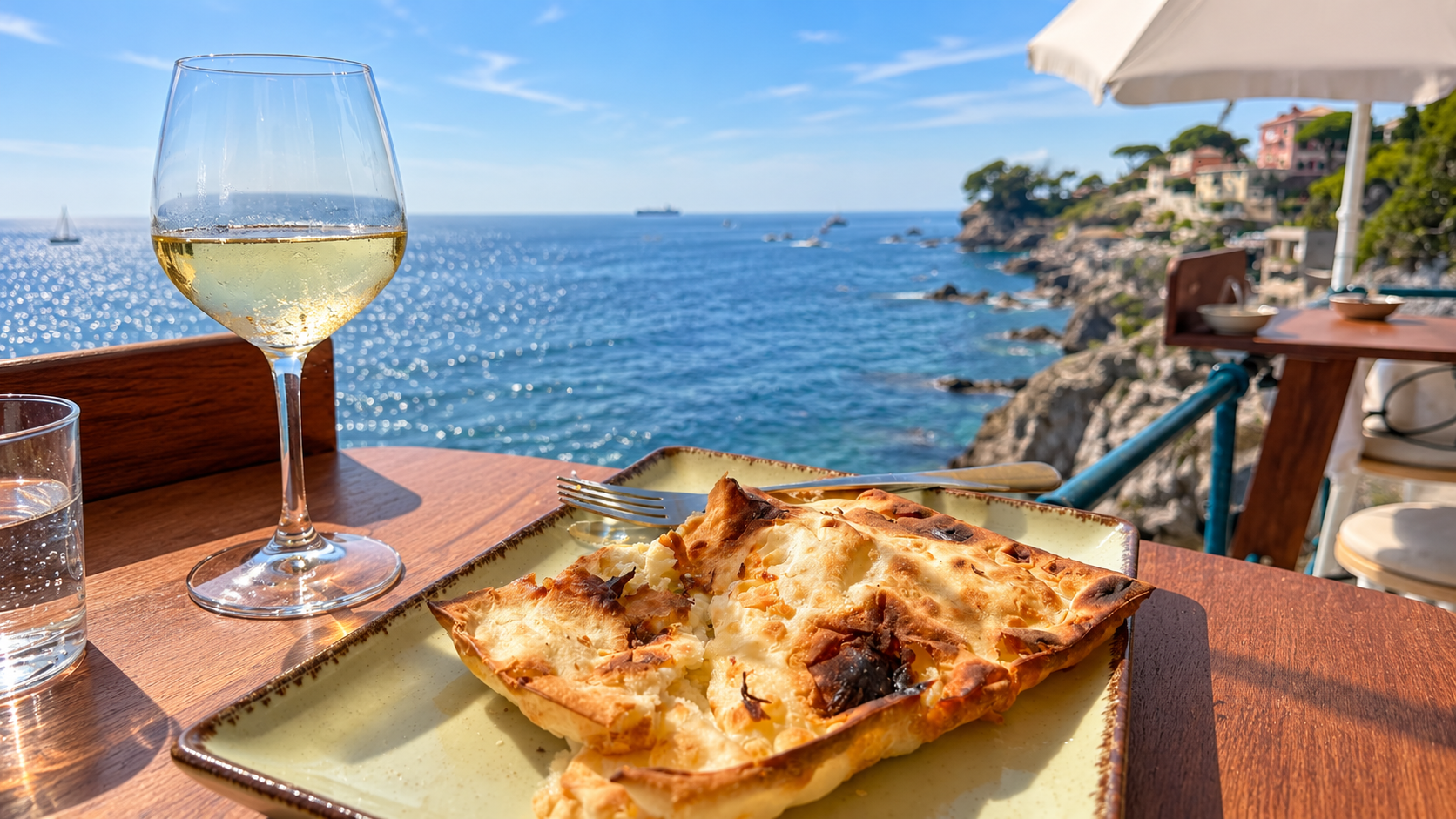
After arriving shortly in the town of Recco, a true local Italian beach town known for its Focaccia di Recco col Formaggio, especially from Tossini, a family bakery tracing back to 1899. Thin, crisp, and cracker-like on the outside, it hides a molten center of stracchino cheese that spills out with the first bite, worlds away from the bread in Florence.
Walking into this adorable, colorful, charming fishing village, I wandered around and quickly understood why Camogli means what it does. The most romantic version of the story says it comes from Casa de Moglie, house of the wives, because for centuries this was a town where the men sailed off as captains and seamen while their wives ran the household, the town, and everything in between. At its peak, Camogli's fleet numbered in the hundreds, so many tall ships that it earned the nickname "city of a thousand white sails." Walking along the harbor today, past the small wooden fishing boats still bobbing in the water, it isn't hard to imagine those women standing at the water's edge, watching for sails on the horizon.
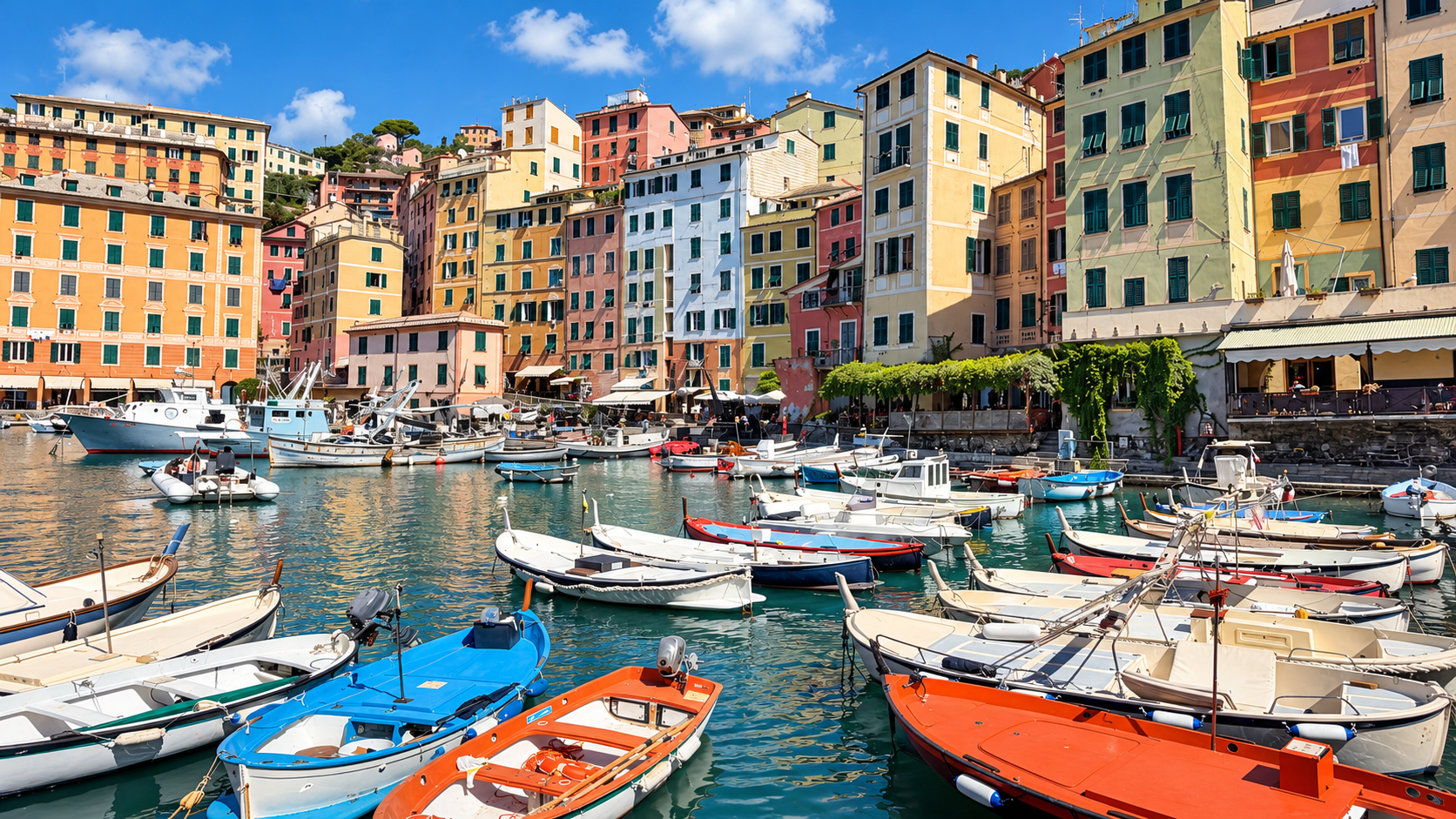
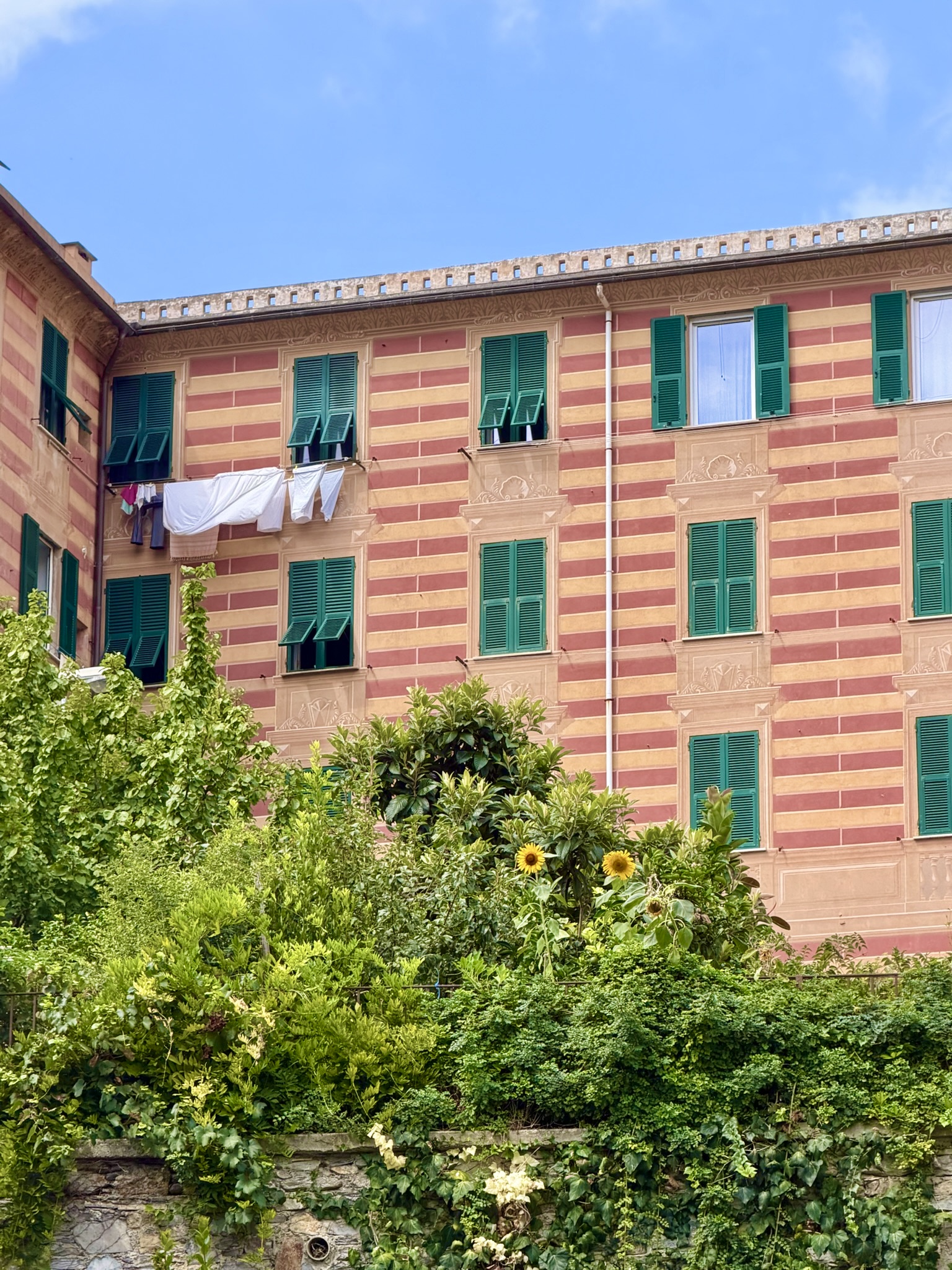
The tall, narrow buildings that line the waterfront wear their colors on purpose. Pinks, yellows, and warm terracottas, trimmed with painted-on shutters and cornices in trompe l'oeil, a trick of the eye that has fooled me more than once into thinking a window was real. Legend has it these painted windows have a sly origin story too, back when the Republic of Genoa taxed homes by their number of windows, so the clever and image-conscious bricked up the real ones and painted on fakes instead, keeping up appearances without paying a lira more. Whether that's the whole truth or not, the effect is undeniable, and the colors weren't just for beauty either; sailors coming home used the hues and patterns to recognize their own house from far out at sea. There is something deeply moving about a whole village painted so its people could always find their way home.
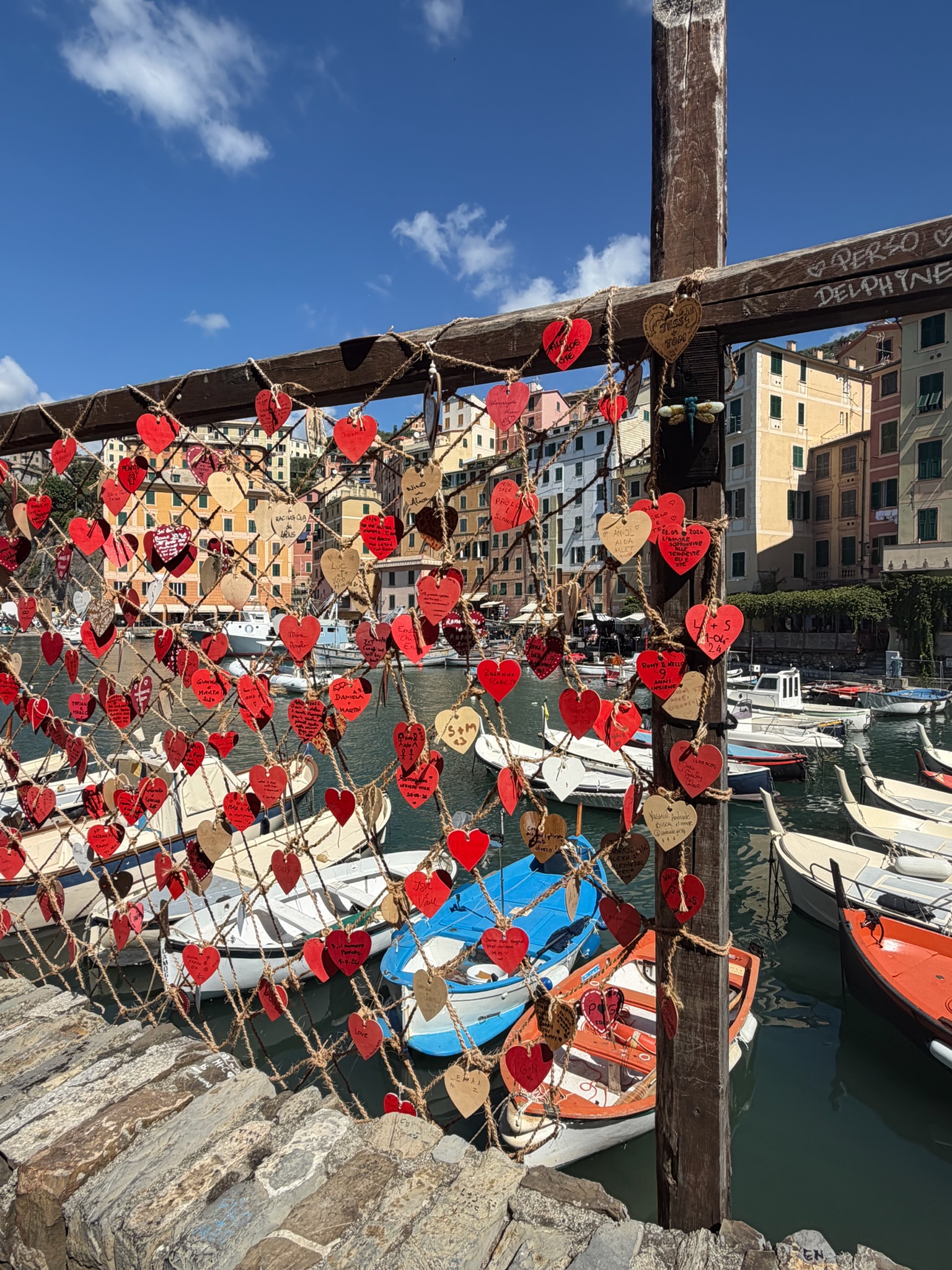
I found my way to the harbor, where fishing nets are strung up along the pier, and noticed something unexpected woven into them: tiny hearts. Every February, lovers here tie small coconut-fiber hearts inscribed with names and promises to the nets draped along the marina by the Camogli Fishermen's Cooperative, a tradition going back decades. Even now, months later, a few stubborn hearts still cling to the netting, faded by sun and salt; little declarations left behind by strangers.
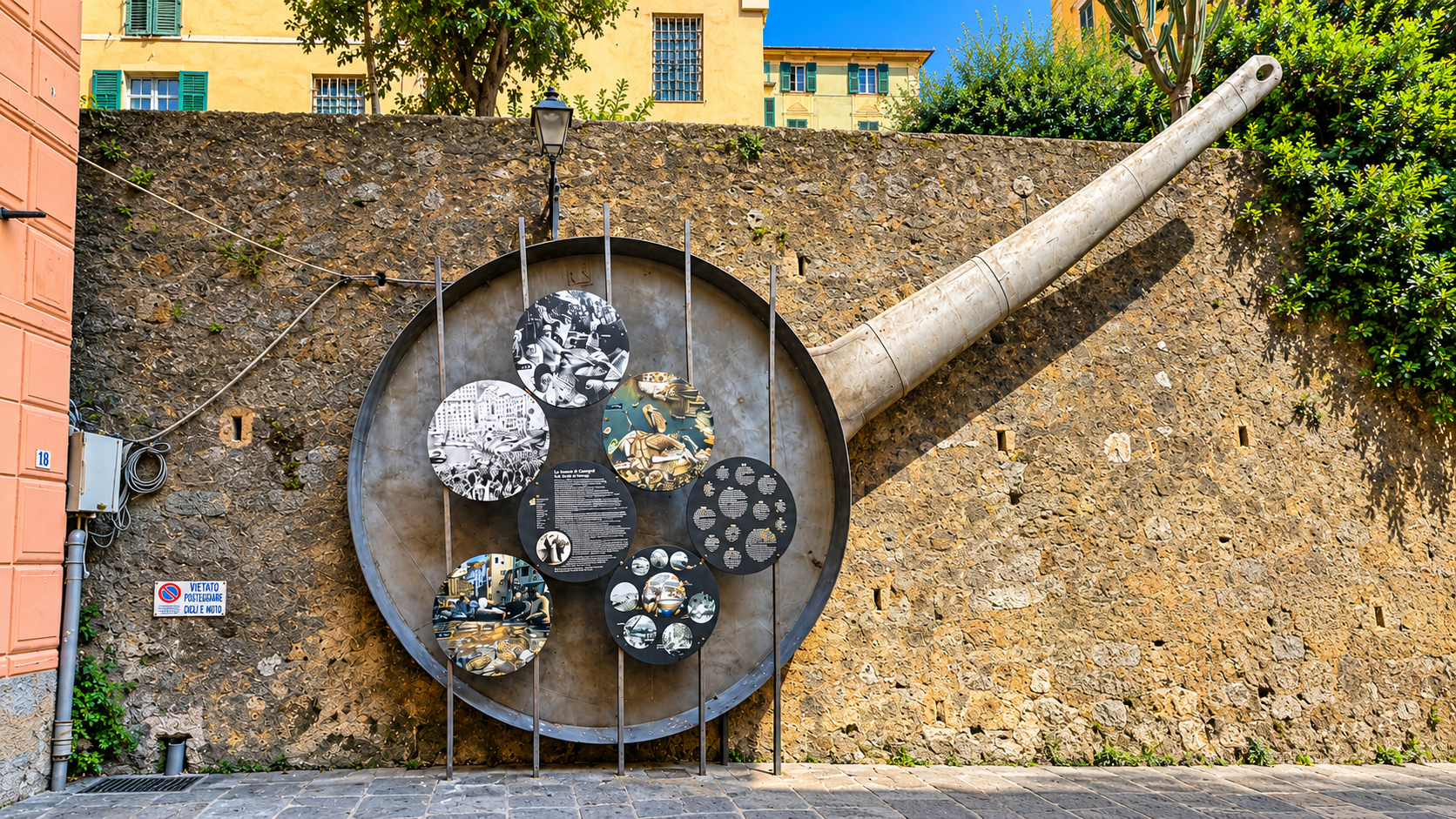
And then there is the pan. Tucked away, waiting for its one day of glory each May, is a stainless-steel frying pan nearly four meters across, weighing almost three tons, with a handle six meters long. Once a year, for the Sagra del Pesce, the entire town gathers as fishermen fry thousands of pounds of fresh catch in this enormous pan right on the waterfront, a tradition dating back to 1952, feeding the whole town for free. I couldn't help but stand in front of it and imagine the smell of frying fish drifting over the piazza, the entire town shoulder to shoulder for a festival that has nothing to do with tourists and everything to do with who they are.
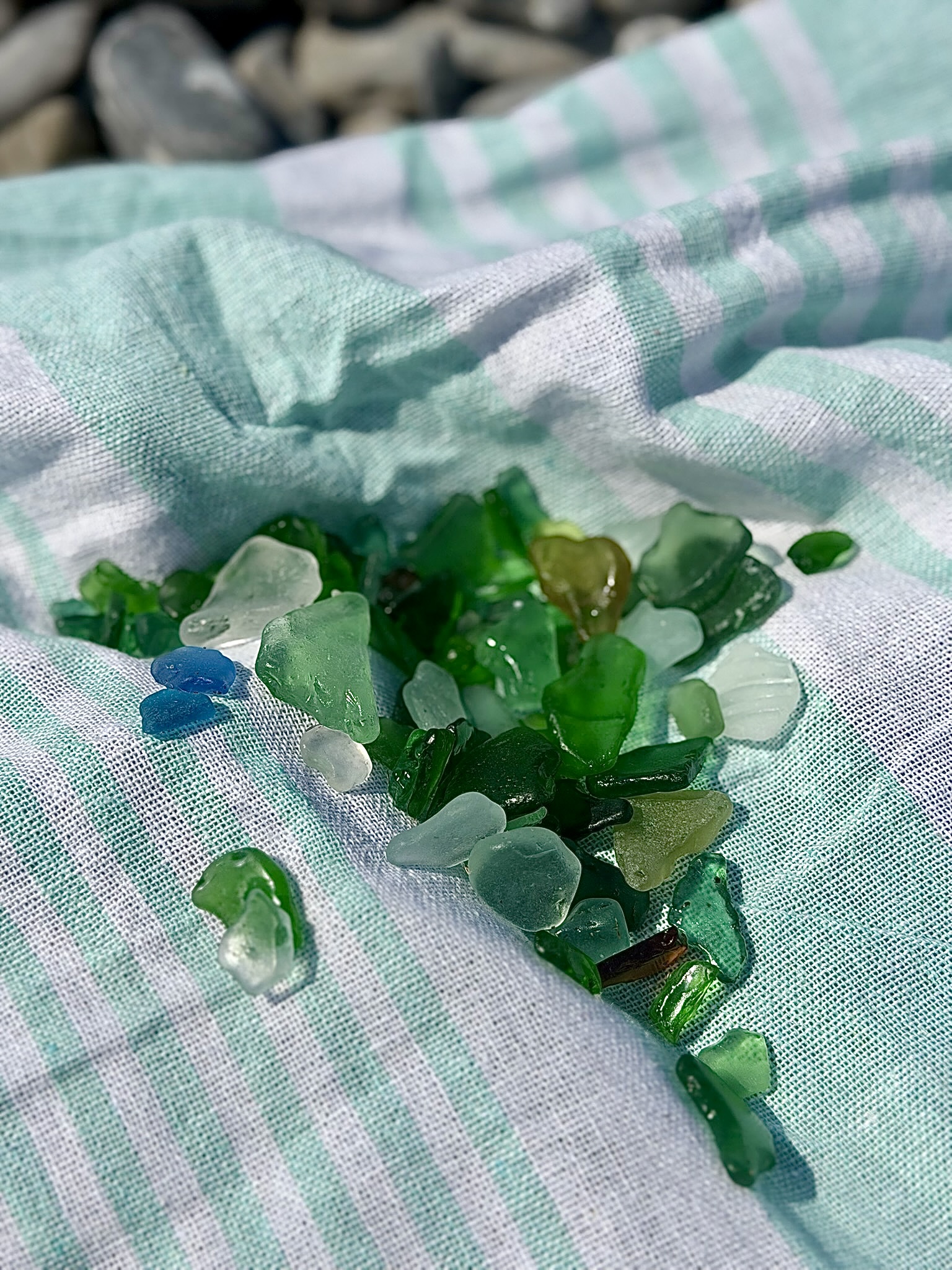
I spent the afternoon doing exactly what the town seemed to want me to do: nothing, beautifully. I made my way down to the beach and swam in water so clear and blue it barely felt real. The Ligurian Sea wrapped around me, cool and soft. Between the swims, I combed the little pebbled shoreline for sea glass. Small pieces of blue, green, and frosted white, tumbled smooth by years of tide, tucking my favorites into my bag. I already have plans for them: a small art piece for my home, something to hold onto from this afternoon long after I've left.
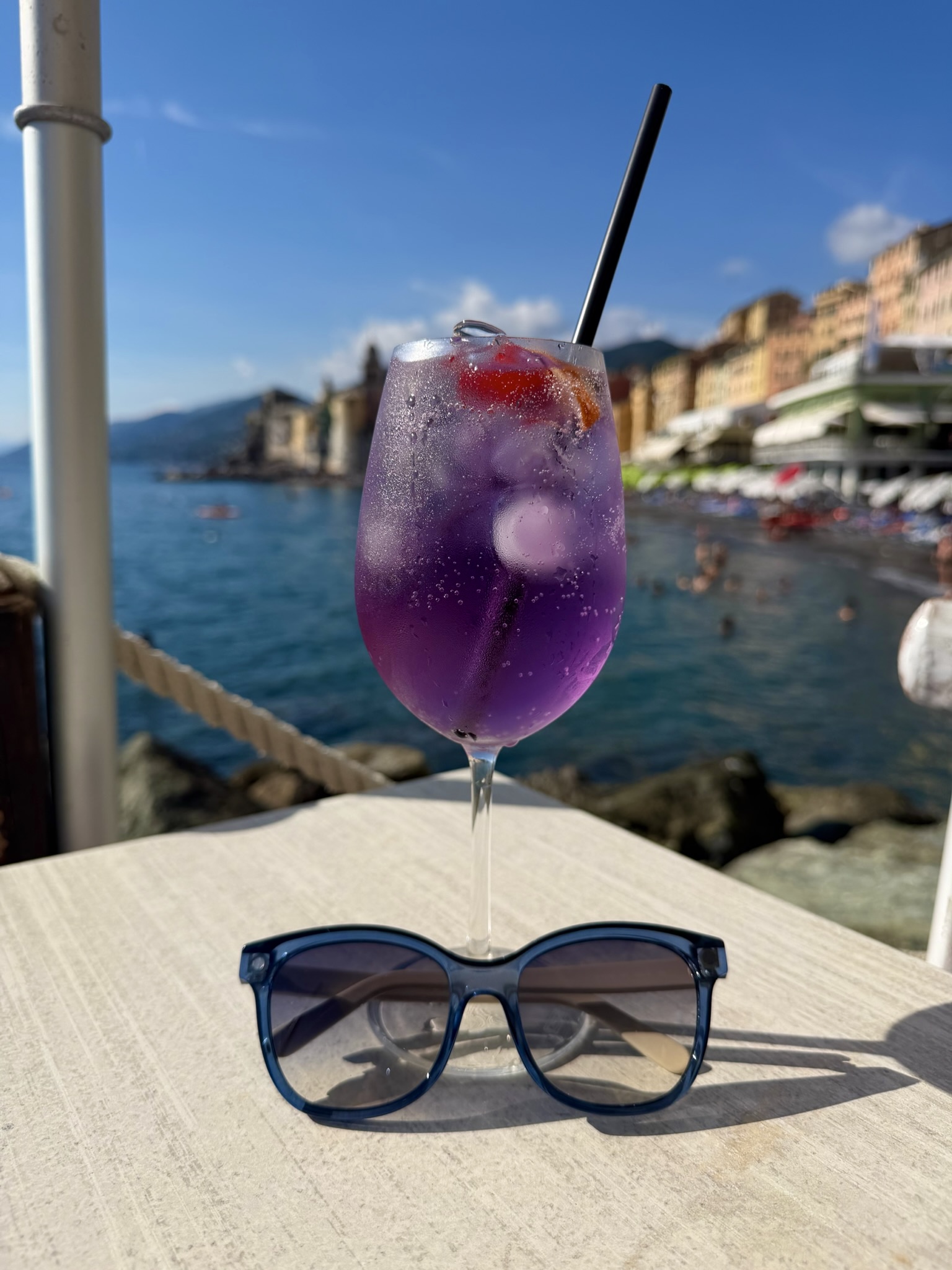
When I'd had enough sun, I made my way to La Rotonda, a restaurant with its own bagni right on the water. I ordered the vongole, the clams sweet and briny in a broth I wanted to drink straight from the bowl, paired with a glass of Vermentino. This is the kind of place built for lingering, half your body still salty from the sea, a glass sweating in the afternoon light, caught in that particular kind of temptation between diving back into the water or getting up to wander the little streets behind you, lined with artisan shops selling ceramics, linens, and small treasures made by local hands.
I did both eventually. That's the thing about Camogli, it does not rush you. I lost track of time completely, and when I finally looked up, the light had turned gold, spilling itself across the buildings, the focacceria, the restaurant terraces, and the church perched at the edge of the water. I liked it so much I came back the next afternoon just to watch it happen again.
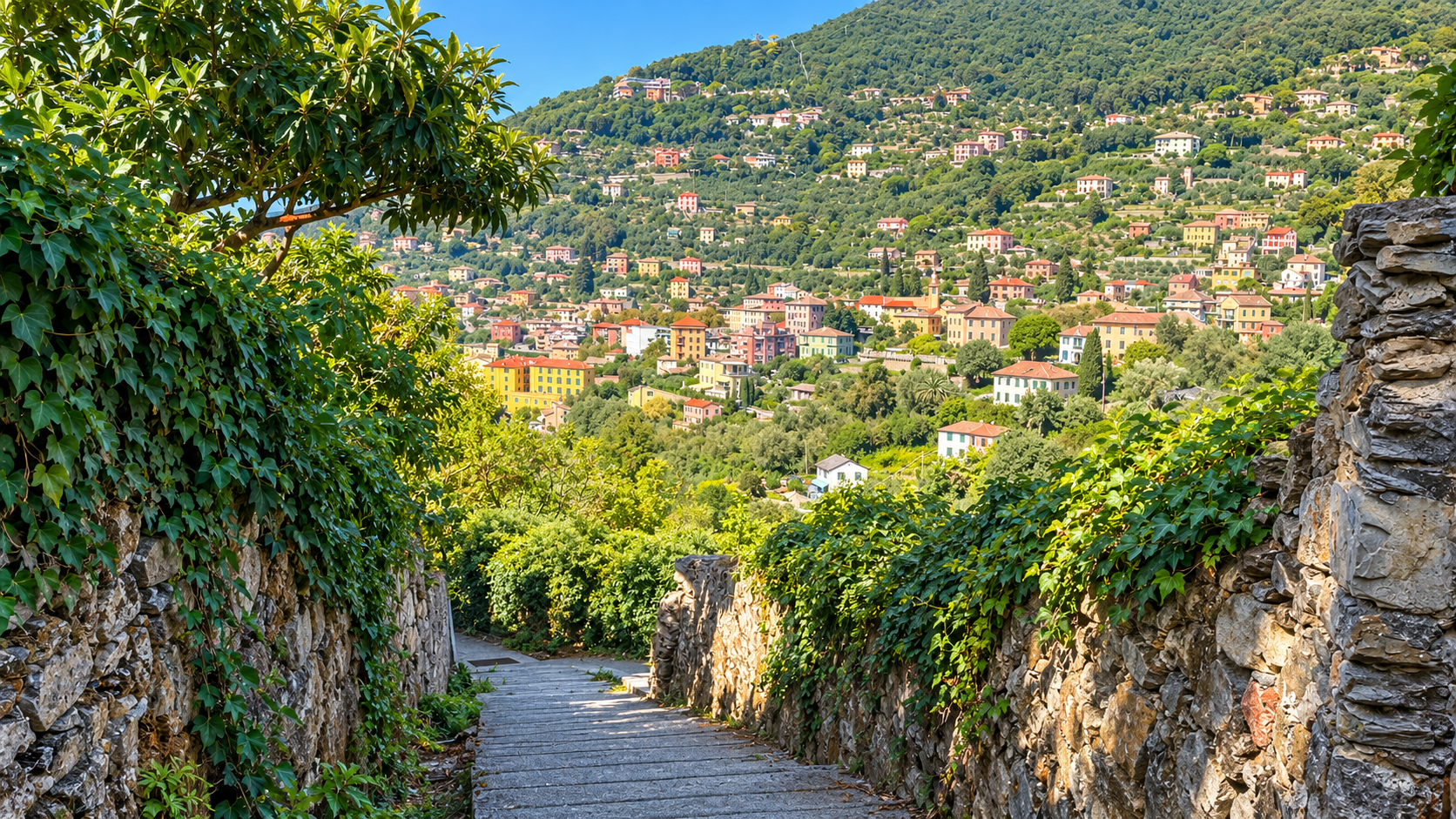
For anyone with a little more adventure in them, the walk from Camogli up to San Rocco is something unforgettable. The trail climbs through olive groves and alongside a small stream, the sound of running water keeping you company, before delivering you to nearly 900 steps carved into the hillside. At the top, the tiny village of San Rocco and its little church sit perched above the cliffs, looking out over the whole gulf. It left something memorable in me and, conveniently, just enough room for more focaccia and a well-deserved spritz later.
By Janet von Rusten
Exquisitely Italy
Ready to experience Italy this way?
Every journey I curate is as personal as the stories I write here. Let's plan yours.