Destinations
Lake Orta and Isola San Giulio: The Quiet Jewel of the Italian Lakes
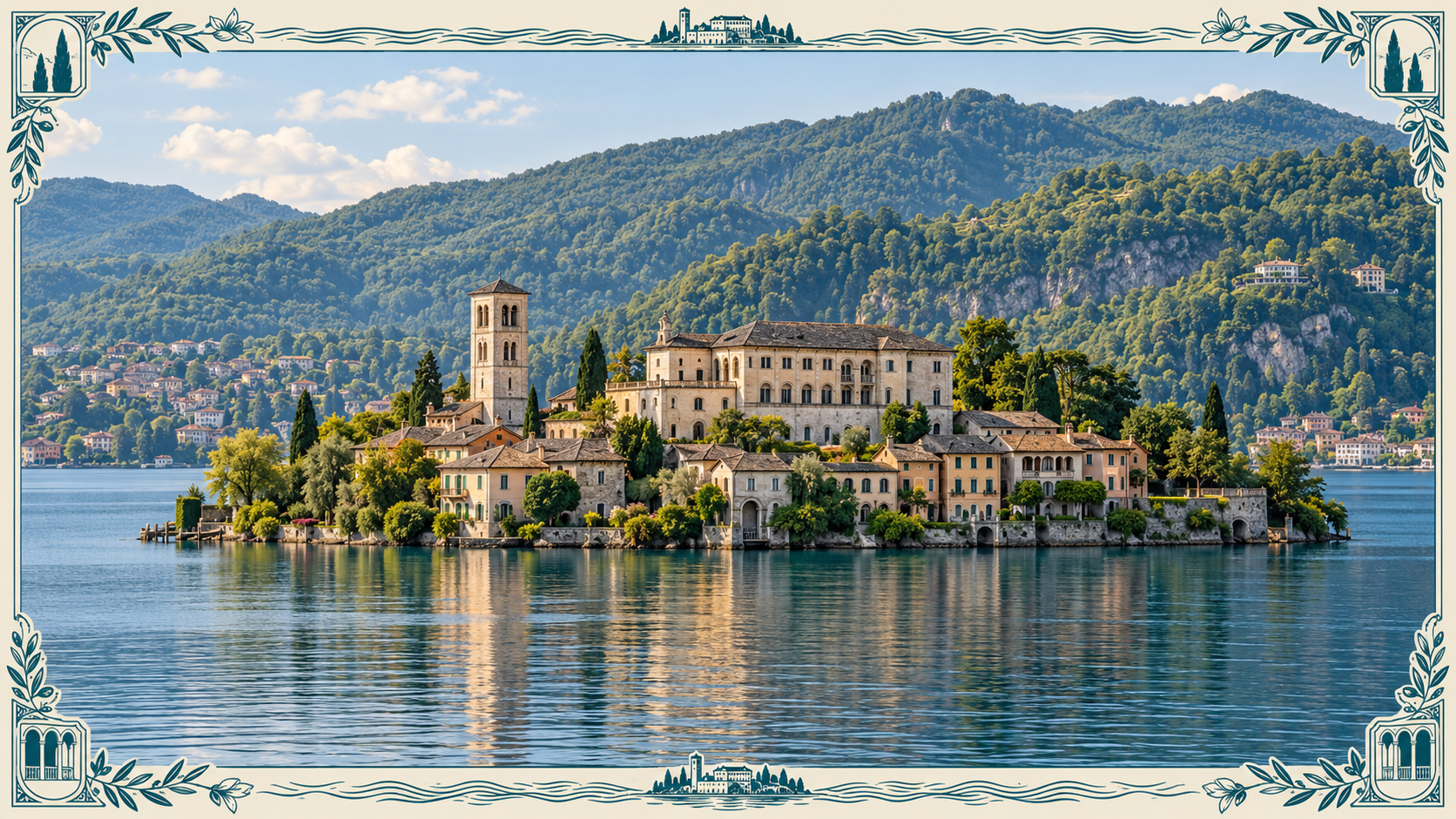
There is a lake in northern Italy that seems to speak in a whisper. While Lake Como gathers its crowds, its ferries, and its glittering villas, Lake Orta rests just to the west in Piedmont, wrapped in green hills and a hush that feels almost deliberate. I recently spent time there, and I came home convinced that it is one of the most beautiful secrets the Italian Lakes keep.
Just beyond Lake Como lies a quieter Italian escape, where cobbled lanes, centuries-old frescoes, and soft church bells invite you to slow down. Discover Lake Orta and Isola San Giulio, a tiny island rich in legends, beauty, and unexpected moments of stillness.
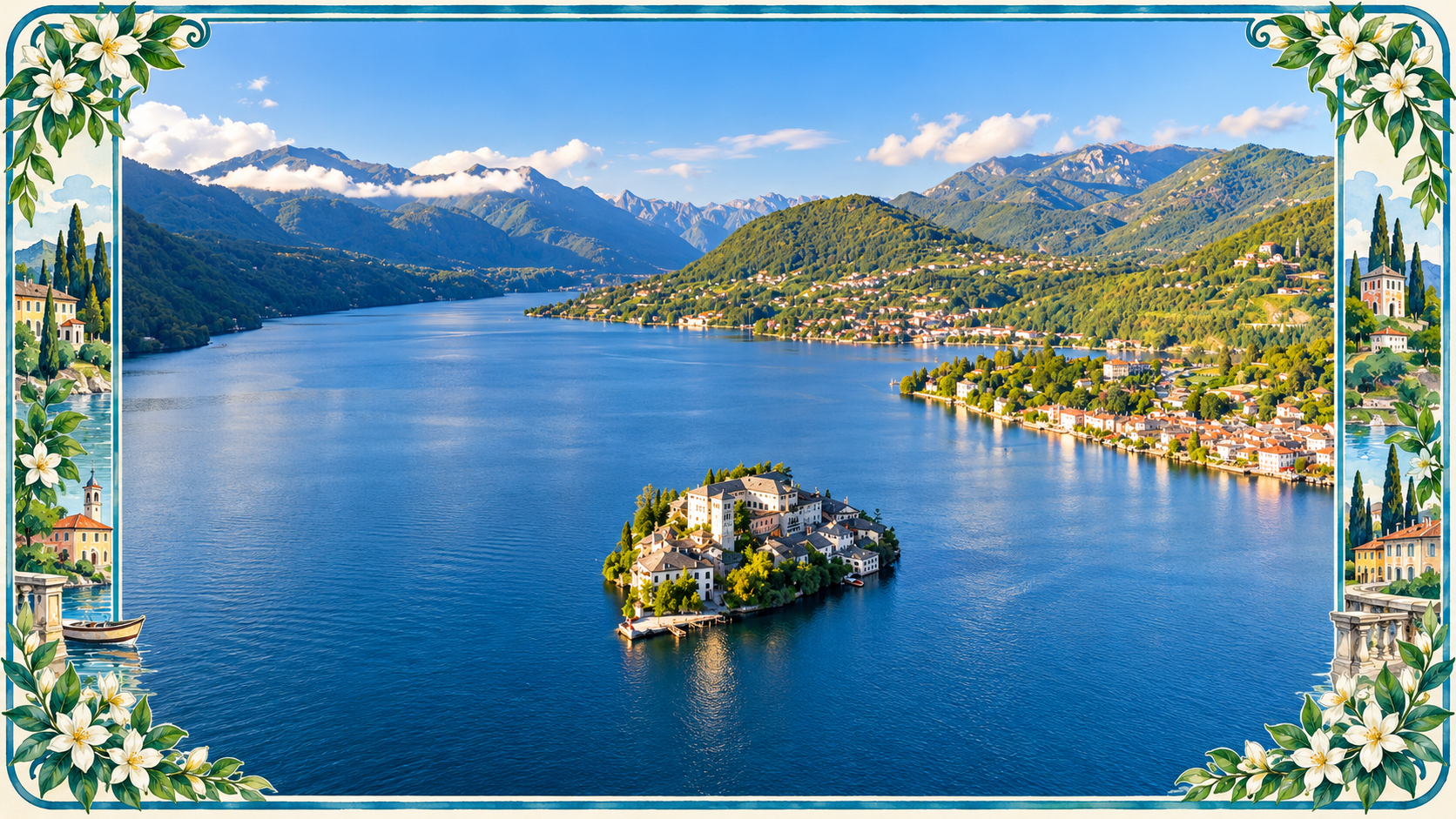
At its heart floats a tiny island that appears to rise straight out of the water like a vision: Isola San Giulio.
An Island Born of Legend
Isola San Giulio measures only 275 meters from end to end, yet it holds more than sixteen centuries of story. According to legend, Saint Julius, a Greek missionary of the 4th century, crossed the lake on his outstretched cloak, carried by the wind, to free the island from the dragons and serpents said to live there. Those creatures were symbols of paganism, and once they were banished, he built here the hundredth and final church of his mission. The legend lingers in the most delightful way. In the sacristy of the basilica hangs a large, fossilized vertebra that, tradition insists, once belonged to one of those very dragons. Whether you believe it or not, it sets the tone for an island where history and imagination have always walked hand in hand.
The Women's Island
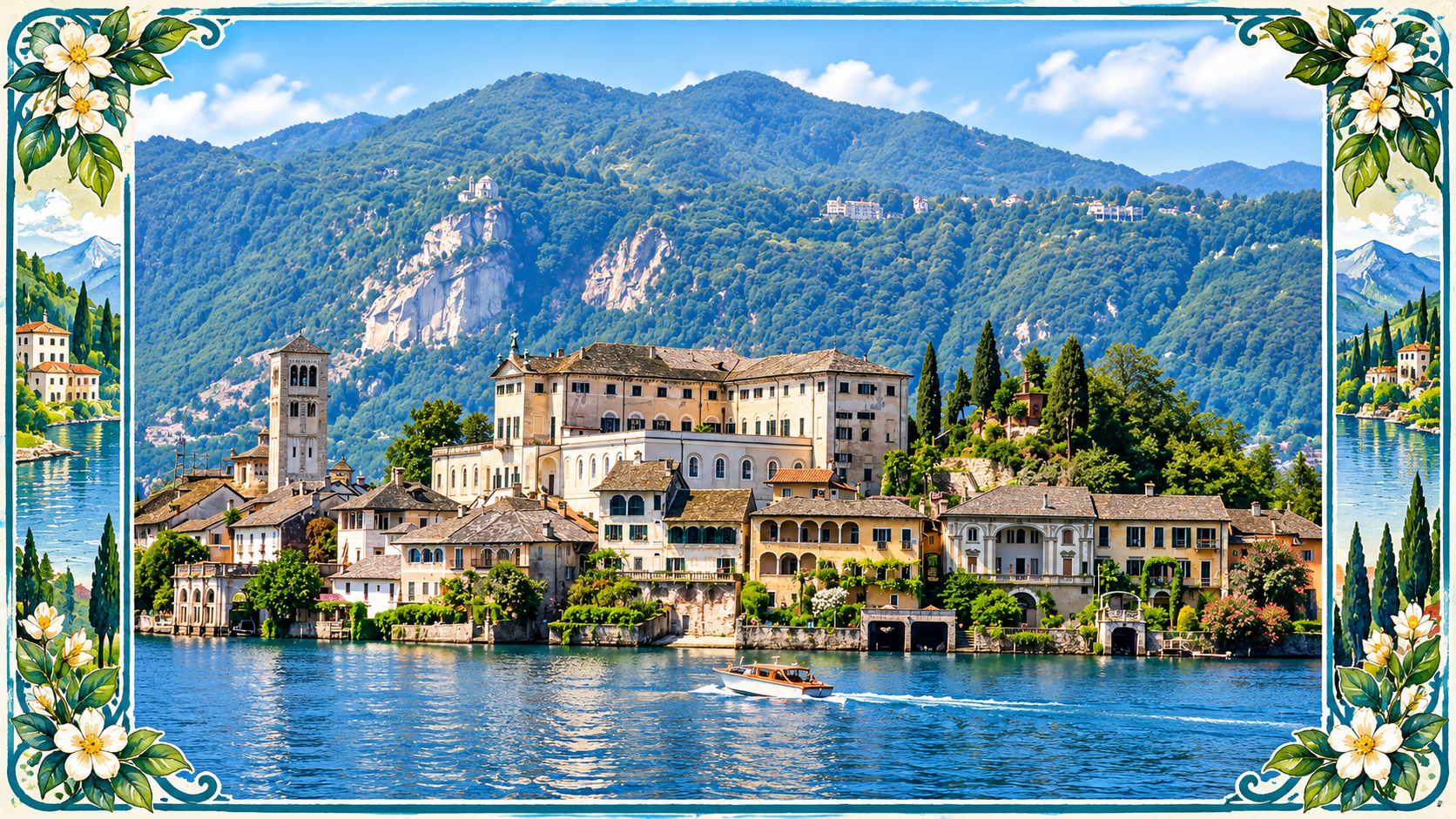
Today, the island is often called the Women's Island, a name that comes from the community that has made it home. In 1973, six Benedictine nuns from the Abbey of Viboldone, near Milan, were sent under the guidance of Mother Anna Maria Cànopi to found a new monastery here. They settled into the former seminary and bishop's palace, and the Abbey of Mater Ecclesiae was born. That small beginning has since grown into a flourishing cloistered community that numbers in the dozens.
The nuns live a life of prayer, study, and silence, but their hands are never idle. They are renowned throughout Italy for restoring antique textiles: precious tapestries, ancient fabrics, and sacred vestments, some centuries old. Their workshop has earned a national reputation for its excellence, and their work has even included restoring garments that belonged to missionaries recognized by the Church as martyrs. There is something deeply moving in knowing that, behind those quiet walls, needle and thread are mending the threads of history itself, stitch by patient stitch.
The nuns also bake the traditional pane di San Giulio, a sweet bread tied to the island's heritage, a small taste of the abbey's world for those who wander by.
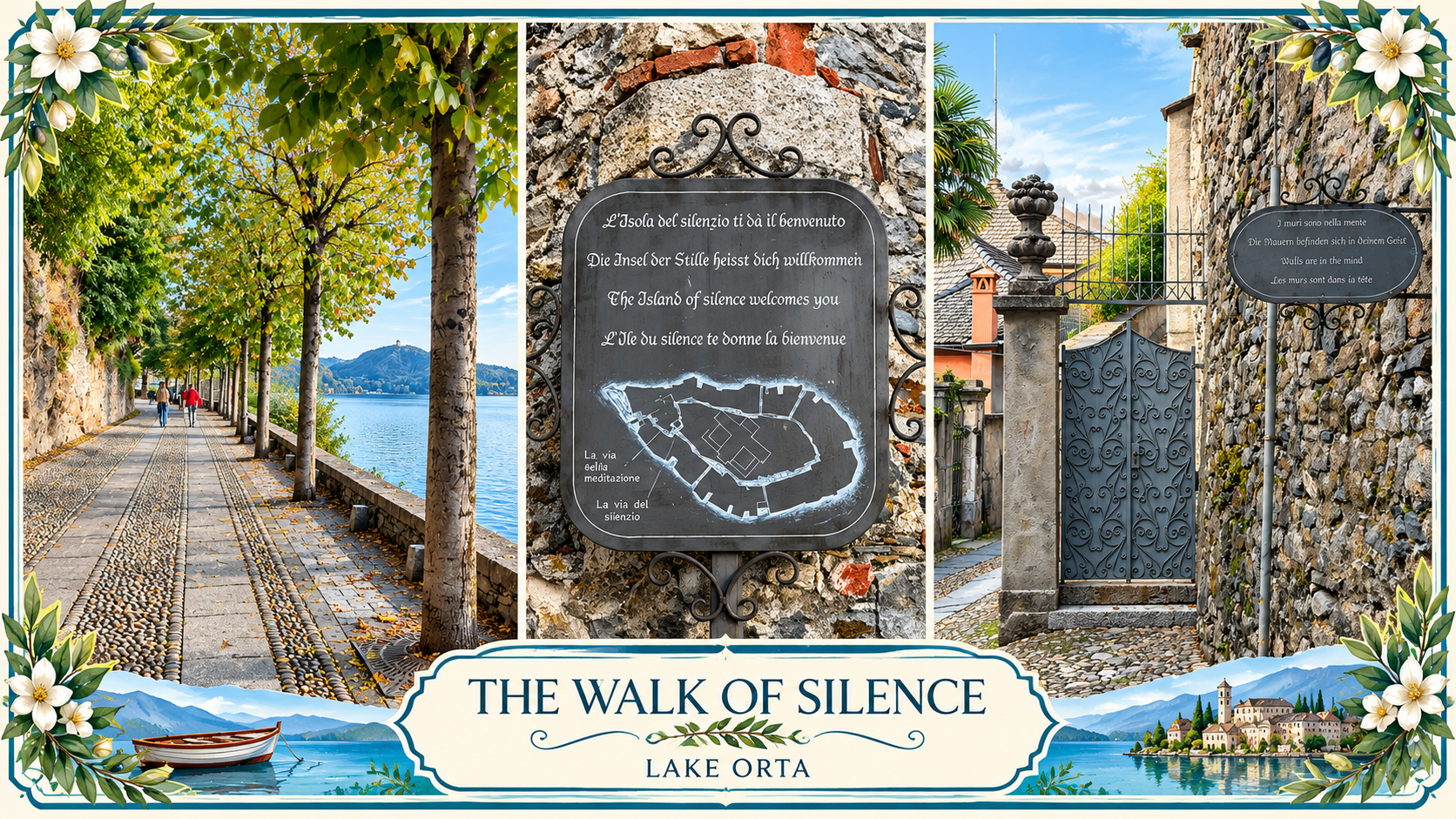
The Path of Silence The island has only one real street, a narrow, cobbled lane that circles its edge. Known as the Via del Silenzio e della Meditazione, the Path of Silence and Meditation, walking it is the heart of any visit.
Along the way, small signs appear at quiet intervals, each offering a short reflection written in Italian, German, English, and French. They invite you to pause, read, and look inward, gentle thoughts on silence, listening, and the present moment. Simple words, but on this island they land with surprising weight.
There are no cars, no shop fronts calling for your attention, no noise beyond the lap of water against stone and the occasional bird. I found myself slowing down without meaning to. The serenity seemed to pour out of the cobblestones themselves, rising up through the soles of my shoes until my thoughts grew still. It is a rare gift, in our hurried world, to be invited so gently into quiet.
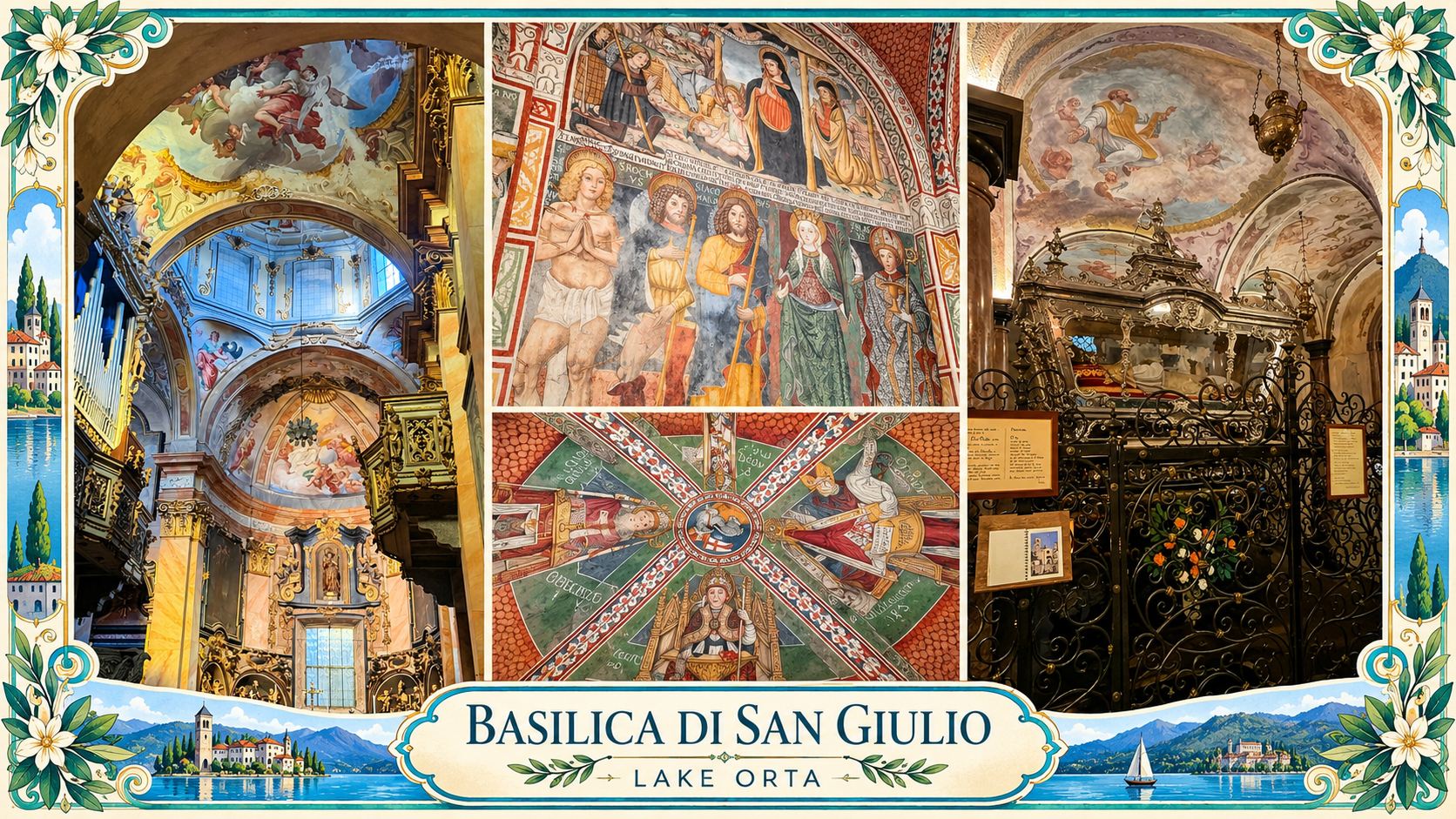
The Basilica of San Giulio
Rising above the rooftops is the Basilica of San Giulio, a Romanesque treasure whose roots stretch back to the very first centuries of Christianity in this region. Archaeologists have uncovered traces of an early church from the 5th and 6th centuries beneath the floor. The building was damaged during the sieges of the 10th century, when Emperor Otto I besieged the island, and was rebuilt and expanded in the centuries that followed, gaining its three naves, its dome, and its handsome Romanesque bell tower.
Step inside and the walls come alive. Frescoes painted between the 14th and 19th centuries cover the nave and aisles, most of them depicting saints, layered over one another like pages in a family album of faith. The colors have softened with age into dusky reds, faded golds, and gentle blues that seem to glow in the low light. The columns, each different from the next, were salvaged from even older structures, a quiet reminder of the generations who have prayed beneath this roof.
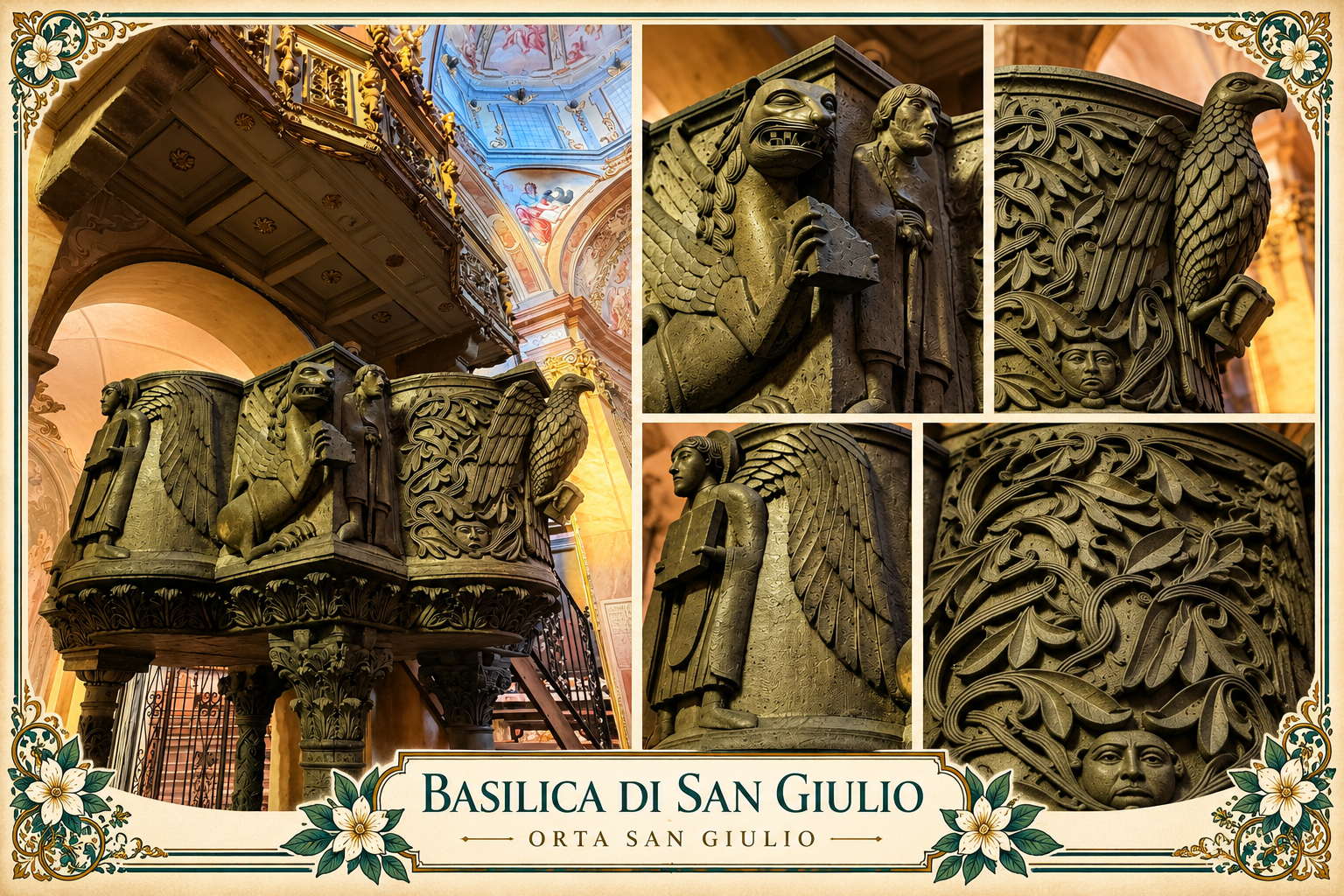
A Rare and Remarkable Pulpit
The basilica's true masterpiece is its pulpit, or ambo, carved in the early 12th century from serpentine stone quarried nearby at Oira. Once a deep green, the stone has darkened over the centuries to an almost black, bronze-like sheen. It is considered one of Italy's finest and rarest surviving examples of Romanesque sculpture.
Its parapets are densely carved with the symbols of the four Evangelists, intertwining plant motifs, and mysterious creatures locked in the eternal struggle between good and evil. Among the figures is one many scholars believe portrays William of Volpiano, the influential Benedictine abbot born on this very island in the 10th century. Standing before it, you sense the hands of medieval craftsmen who worked this stone nearly nine hundred years ago, and you cannot help but marvel that it has survived so beautifully.
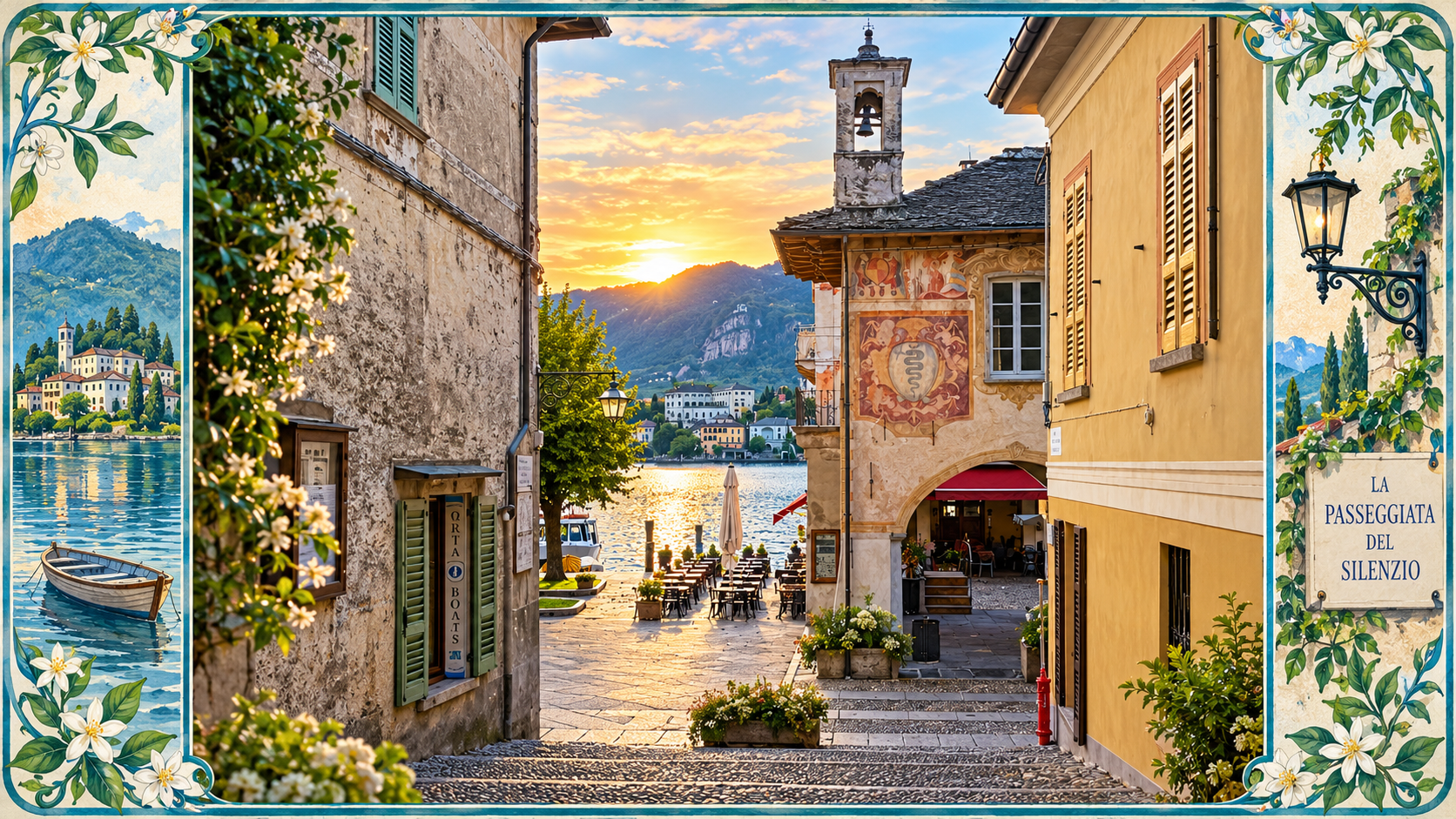
When the Bells Ring at Five
Every evening at five o'clock, the church bells ring out across the water, and Mass begins. If you can, plan your visit so you are still on the island at this hour. The sound rolls over the lake and echoes softly back from the hills, and for a moment the whole island seems to hold its breath.
Then comes the golden hour. The light turns honeyed and warm, spilling across the terracotta roofs, gilding the bell tower, and laying a shimmering path across the water toward the mainland. Everything you have seen during the day- from the cobblestones, the frescoes, the reflections on the lake- comes together in one perfect moment. It is the kind of beauty that stays with you long after you have left.
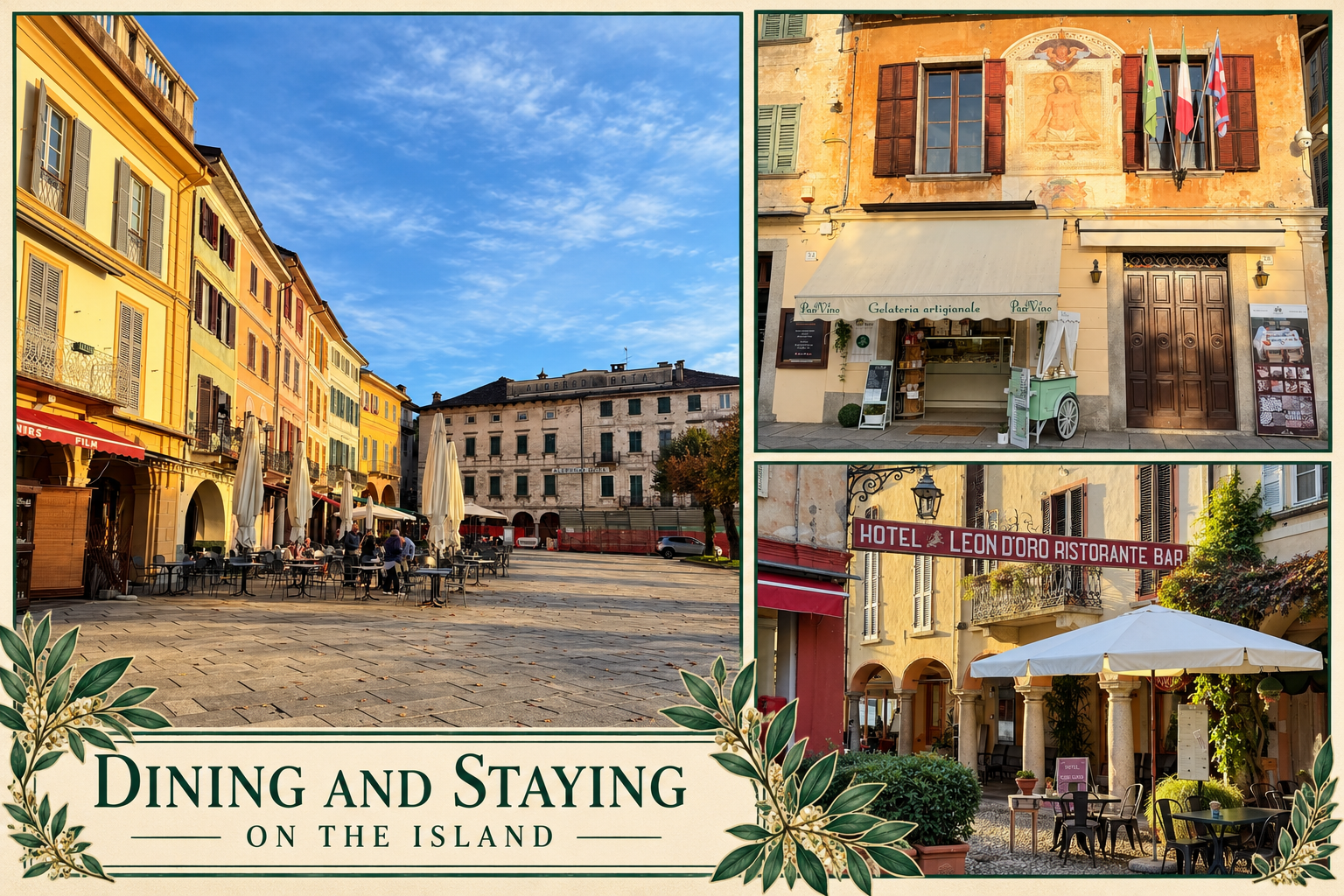
Dining and Staying on the Island
For such a small place, Isola San Giulio offers two very different ways to linger. The island has only one restaurant, and dining there, with the lake stretched out before you and the bell tower overhead, feels like having it almost to yourself.
For those seeking something far more unusual, you can stay with the nuns of Mater Ecclesiae, who welcome guests to share in the rhythm of monastic life; enjoying their simple, home-cooked meals is an experience unlike any luxury hotel could offer. For the traveler who longs for stillness, reflection, and a truly authentic encounter, it may be the most memorable night of an entire Italian journey.
A Fairytale Town Just Ten Minutes Away
A private boat ride of only about ten minutes carries you from the island back to the shore and into Orta San Giulio, a town that looks as though it were lifted from the pages of a storybook.
Its heart is Piazza Motta, opening directly onto the water and framed by elegant porticoes, pastel façades, and wrought-iron balconies spilling with flowers. Narrow cobbled lanes wind uphill between old palazzi, past little cafés and artisan shops, each turn revealing another glimpse of the lake. Overlooking the square stands the charming Palazzotto, the old town hall, raised on its arcade and adorned with faded frescoes. It is a place to wander slowly, gelato in hand, with nowhere in particular to be.
The Sacro Monte: A UNESCO Treasure Above the Lake
Just above the town, a gentle path climbs through a wooded nature reserve to the Sacro Monte di Orta, the Sacred Mount. Since 2003, it has been part of the UNESCO World Heritage Site of the Sacri Monti of Piedmont and Lombardy.
Begun in 1590 and developed over nearly two centuries, the Sacro Monte is dedicated to Saint Francis of Assisi. Twenty chapels are scattered along the hillside, each built in its own style, from Renaissance to Baroque to Neoclassical, and each telling a chapter of the saint's life. Inside, vivid frescoes and remarkably lifelike terracotta statues bring the scenes to life with a realism that is both touching and astonishing.
Wander from chapel to chapel beneath oaks and pines, following the story as you go, until you reach the hill's crest. There, the trees part to reveal a breathtaking view: the calm blue of Lake Orta below, and Isola San Giulio floating in its center like a jewel set in silver.
Why Lake Orta Deserves a Place on Your Journey
Lake Orta is not a place for rushing. It is a place for listening, for walking slowly, for letting the bells and the water and the golden light do their quiet work. It offers everything travelers love about the Italian Lakes, the beauty, the history, the romance, without the crowds that can overwhelm its more famous neighbors.
If you are dreaming of an Italy that feels personal, peaceful, and deeply authentic, let Lake Orta and Isola San Giulio be the hidden gem you discover next.
Ready to experience the serenity of Lake Orta for yourself? Exquisitely Italy designs bespoke journeys to the Italian Lakes, including private boat excursions, curated visits, and unforgettable moments like these. Contact us to start planning yours.
Exquisitely Italy
Ready to experience Italy this way?
Every journey I curate is as personal as the stories I write here. Let's plan yours.