Culinary
The Italian Table, Decoded: A Guide to Enoteca, Osteria, Trattoria & Ristorante
There's history in Italy. There's art, wine, landscapes that stop you mid-sentence. And then there's the thing that quietly outshines all of it, the moment your stomach starts grumbling: the food.
In Italy, choosing where to eat is never as simple as picking a restaurant. It's an entire language of its own, and we're about to teach you how to speak it.
Eating in Italy is never simple, and that's exactly why we love it. Whether this is your first trip or you've spent years wandering cobblestone streets in search of the perfect meal, one question always surfaces:
What's the difference between an Enoteca, an Osteria, a Trattoria, and a Ristorante?
It turns out we're not the only ones who take this seriously. In December 2025, UNESCO officially inscribed Italian cuisine on its Representative List of the Intangible Cultural Heritage of Humanity, the first time any country's cuisine has been recognized in its entirety, rather than a single dish or tradition. UNESCO described it as a communal ritual built on intimacy with food, respect for ingredients, and grandparents passing recipes down to grandchildren at the table. In other words: the world just officially agreed with what every nonna already knew.
So, let's break down where you're actually eating that heritage.
Enoteca: where the wine does the talking
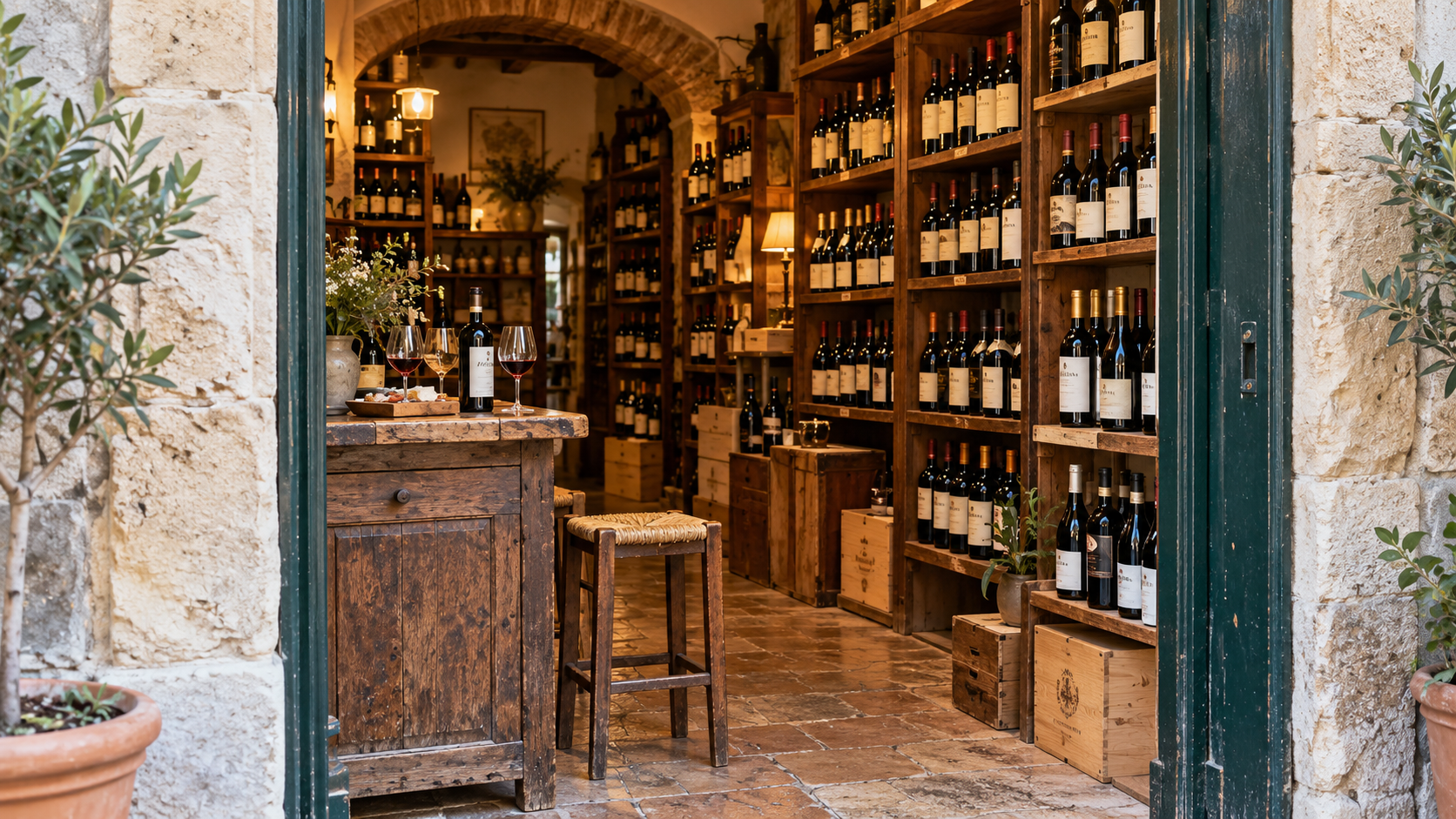
Think of an enoteca as a wine shop with just enough food to keep you upright. You'll find a tagliere (a charcuterie board built for sharing), a panino or two, and small bites designed for one job only: making the wine in your glass taste even better. It's less a meal and more a mood, perfect for an early-evening pause before dinner properly begins.
An enoteca is also one of the best places in Italy for aperitivo, that golden hour ritual of unwinding with a glass of wine or a spritz before dinner. Gather your family around a small marble table and let the conversation wander or meet friends after a long day and toast to nothing in particular. It's equally perfect for a table for one: settle into a quiet corner with a glass of Nebbiolo or Vermentino and simply write, read, or sketch while the room hums softly around you.
There's something grounding about sitting in a local enoteca, watching the same faces pass by, the same shopkeepers wave hello, the same golden light stretch across the piazza. You start to feel like a part of the neighborhood rather than a visitor passing through. Time has a way of slipping away here, one unhurried sip at a time, until you look up and realize the whole afternoon has quietly slipped away before you.
Osteria: the neighborhood's living room
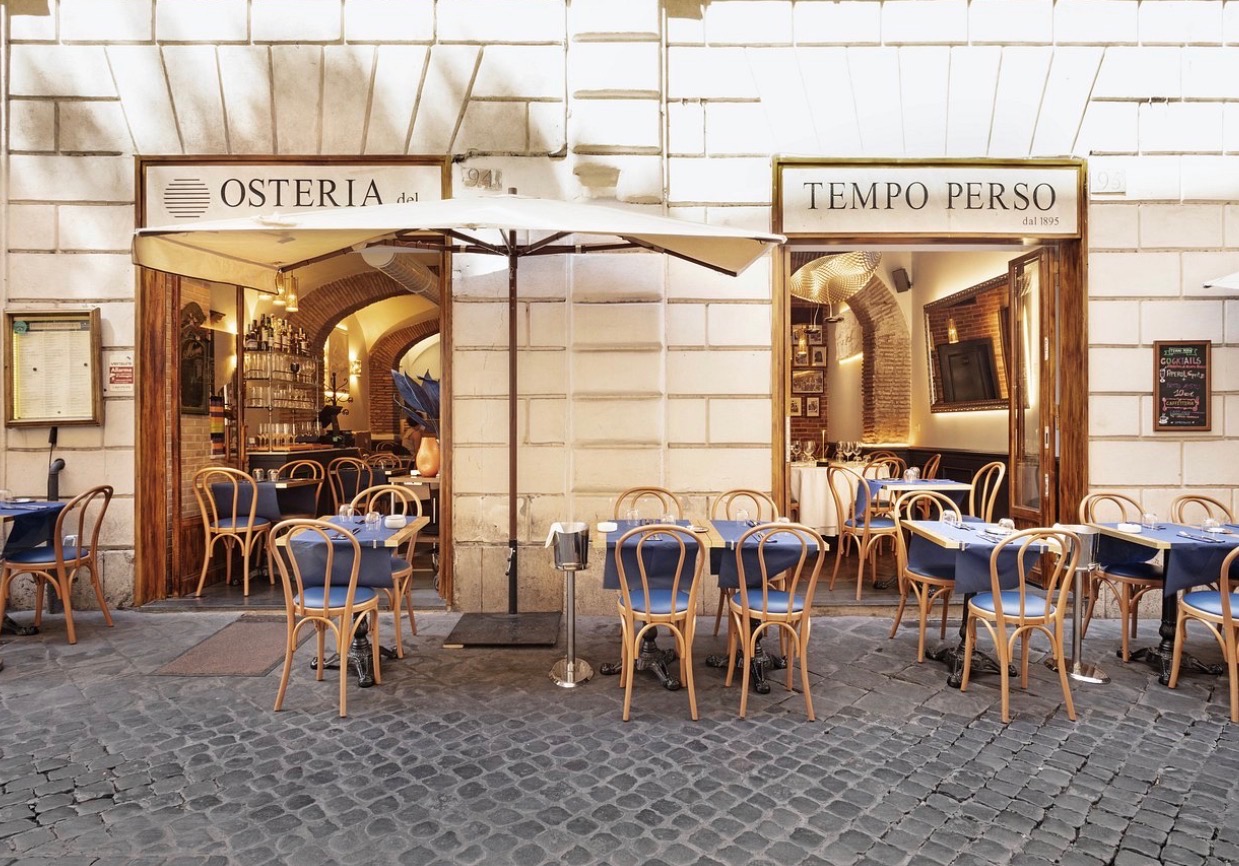
Once upon a time, an osteria was where locals gathered to drink wine, swap gossip, and play cards, bringing their own food along with them. That version still exists here and there, but most modern osterias have blurred into something closer to a trattoria: traditional, regional, unfussy, and easy on the wallet. Menus are sometimes handwritten and change daily, or there's no menu at all, just whatever's cooking. You might end up sharing a table with strangers who become friends by dessert.
Step into an authentic osteria, and you'll notice it right away: the low murmur of dialect being traded across tables, the clatter of pans drifting out from an open kitchen, the smell of garlic and rosemary hitting hot olive oil. These are unpretentious, come-as-you-are places, often family-run for generations, with a short but honest wine list and generous portions. Wooden tables might be worn smooth from decades of elbows and plates, and the walls are often lined with old photographs, vintage wine bottles, or handwritten notes from regulars who've been coming for years.
This is where you go to eat like a local, not a tourist. Expect seasonal, regional dishes built on what was fresh at the market that morning, simple plates that let quality ingredients speak for themselves. It's a genuinely social experience too: don't be surprised if the owner pulls up a chair to recommend the day's special, or if the table next to you strikes up a conversation over a shared carafe of house wine.
A word of caution, though: a few osterias have taken the opposite path entirely, quietly collecting Michelin stars along the way. Beautiful experience. Very different bill.
Trattoria: home, but someone else does the dishes
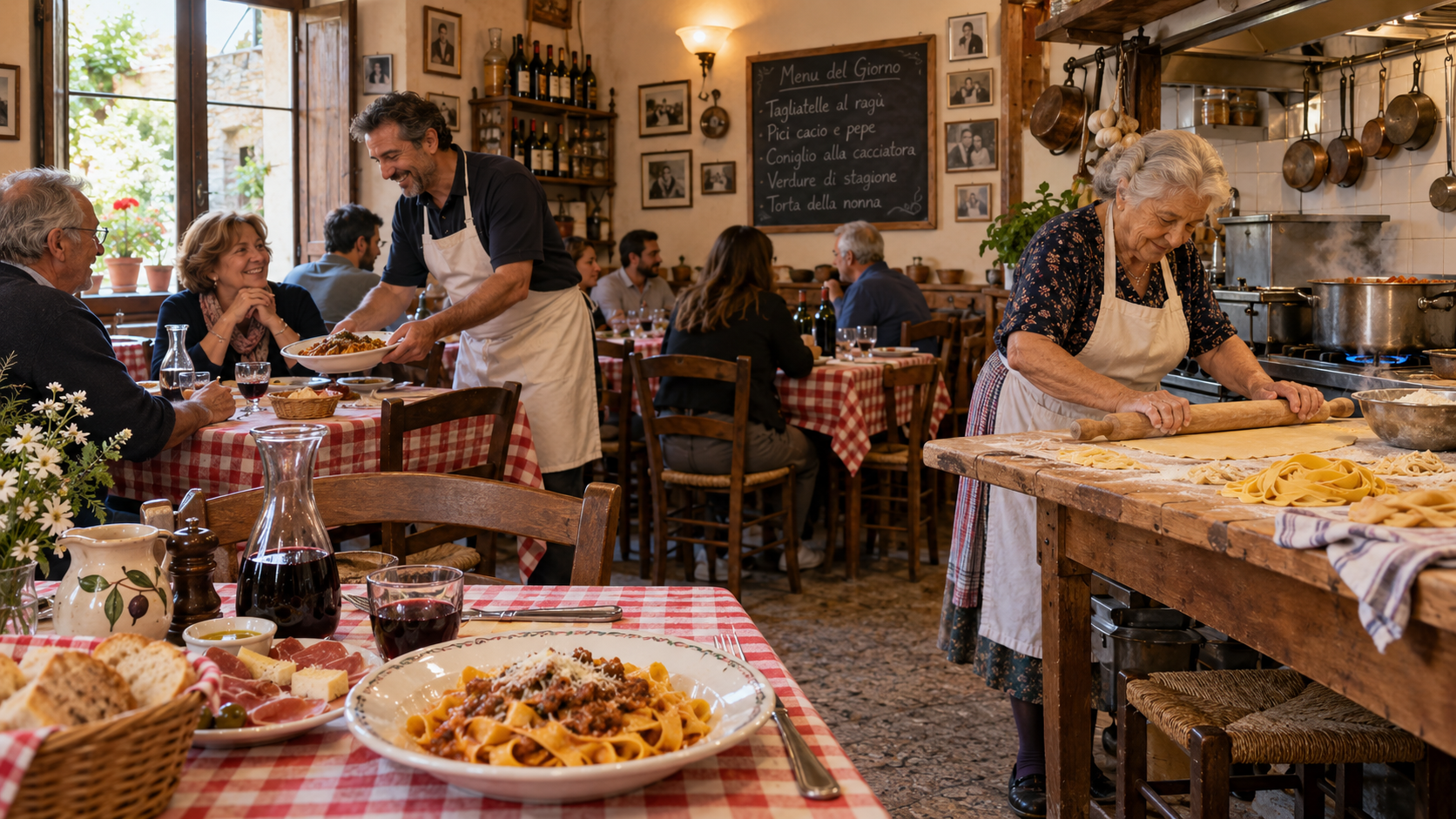
Trattorias are almost always family-run, and it shows in every plate. The menu is longer than an osteria's, built on regional dishes and le ricette dei nonni, the grandparents' recipes, handed down rather than written down. The setting is casual, even rustic, but don't let that fool you. Find the right trattoria, and you'll be back again and again; it becomes your home away from home, minus the chore of doing the dishes afterward.
Walk into a beloved trattoria, and it feels less like a restaurant and more like being welcomed into someone's kitchen. Checkered tablecloths, mismatched chairs, a chalkboard menu that changes with the seasons, and the unmistakable aroma of a slow-simmered ragu that's likely been on the stove since morning. You'll often find nonna herself rolling fresh pasta by hand in full view, or the owner's kids weaving between tables to help during the dinner rush. It's authentic Italian home cooking, served with genuine warmth and zero pretense.
The portions tend to be generous and the pace unhurried; a trattoria meal is meant to be savored over multiple courses, from a simple antipasto to a hearty primo of handmade pasta, followed by a rustic secondo and, if you've saved room, a homemade dessert and a shot of espresso to finish. Prices are typically friendly; the wine is often the house's own, and the whole experience feels less like dining out and more like being fed by family. For travelers craving traditional Italian comfort food and a true taste of local culture, a good trattoria is often the most memorable meal of the trip.
Ristorante: the full fine dining experience
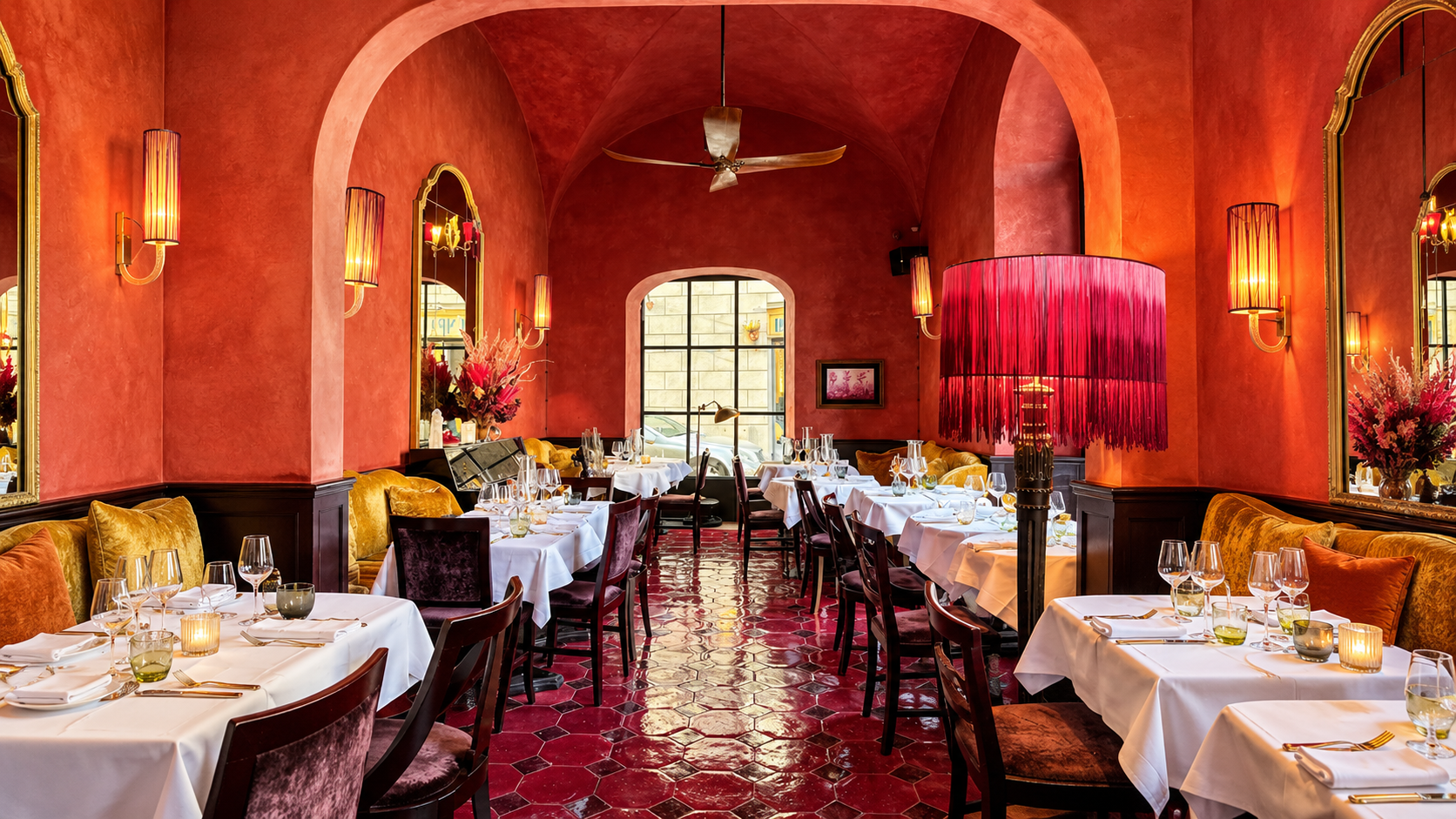
This is the restaurant in the formal sense, and it's where Italian fine dining truly takes center stage. Picture crisp, freshly starched white linen tablecloths pulled taut across the table, catching the candlelight. Silverware polished to a mirror shine, laid out course by course. Crystal glassware that pings softly when you set it down. The air carries the scent of simmering reductions and warm bread, while a hush of quiet conversation and clinking glasses fills the room.
The waitstaff here are true professionals: sharply suited, deeply knowledgeable, and ready to walk you through a menu that often stretches beyond regional classics into refined, international territory. Many upscale ristoranti also keep a dedicated sommelier on hand to pair each course with the perfect glass of wine, elevating the meal from a dinner into an experience.
If you're after an elevated, romantic, or celebratory evening out, the kind with careful pacing, elegant plating, and genuine ceremony, an authentic Italian ristorante is exactly where you want to make your reservation. It's the destination of choice for anniversaries, special occasions, and anyone seeking the best in luxury Italian dining.
With so many options, choosing where to eat in Italy is never simple. But that's rather the point; every category comes with its own rhythm, its own ritual, its own reason to sit down at that table. Wherever you land, rest assured: we can point you in the right direction. Buon appetito.
- Of course, none of this is set in stone. These are simply guidelines built on tradition, not strict rules, and Italian dining continues to evolve as tastes, trends, and generations change over time. The best way to know for sure? Walk in, look around, and let your own experience guide you.
By Janet von Rusten
Exquisitely Italy
Ready to experience Italy this way?
Every journey I curate is as personal as the stories I write here. Let's plan yours.