"Two households, both alike in dignity, in fair Verona, where we lay our scene."
Ancient streets, an Italian love story, and a summer evening beneath the stars. Why Verona is the city I keep returning to — and why 2027 is the year to go.
Shakespeare never set foot in Verona, as far as anyone knows. And yet he chose it. Of all the cities in Italy, this is where he sent his young lovers to meet, marry in secret, and lose everything.
Walk into the old town in the late afternoon, and you begin to understand why. The marble under your feet is pink and worn smooth. The Adige curls around the city like a protective arm. Bells drift over terracotta roofs, and somewhere a waiter is setting out the first glasses of the evening spritz. Verona doesn't shout for your attention the way Venice does, an hour down the road. It waits for you to fall in love with it, quietly, the way the best love stories begin.
From my home in Florence, Verona is an easy train ride north, and it is one of the places I love to visit. Next summer it will tell its most famous story in a way it hasn't been in a generation. Let me show you why I'm building a journey around it.
Two thousand years in one city
Verona wears its history lightly, but it is everywhere.
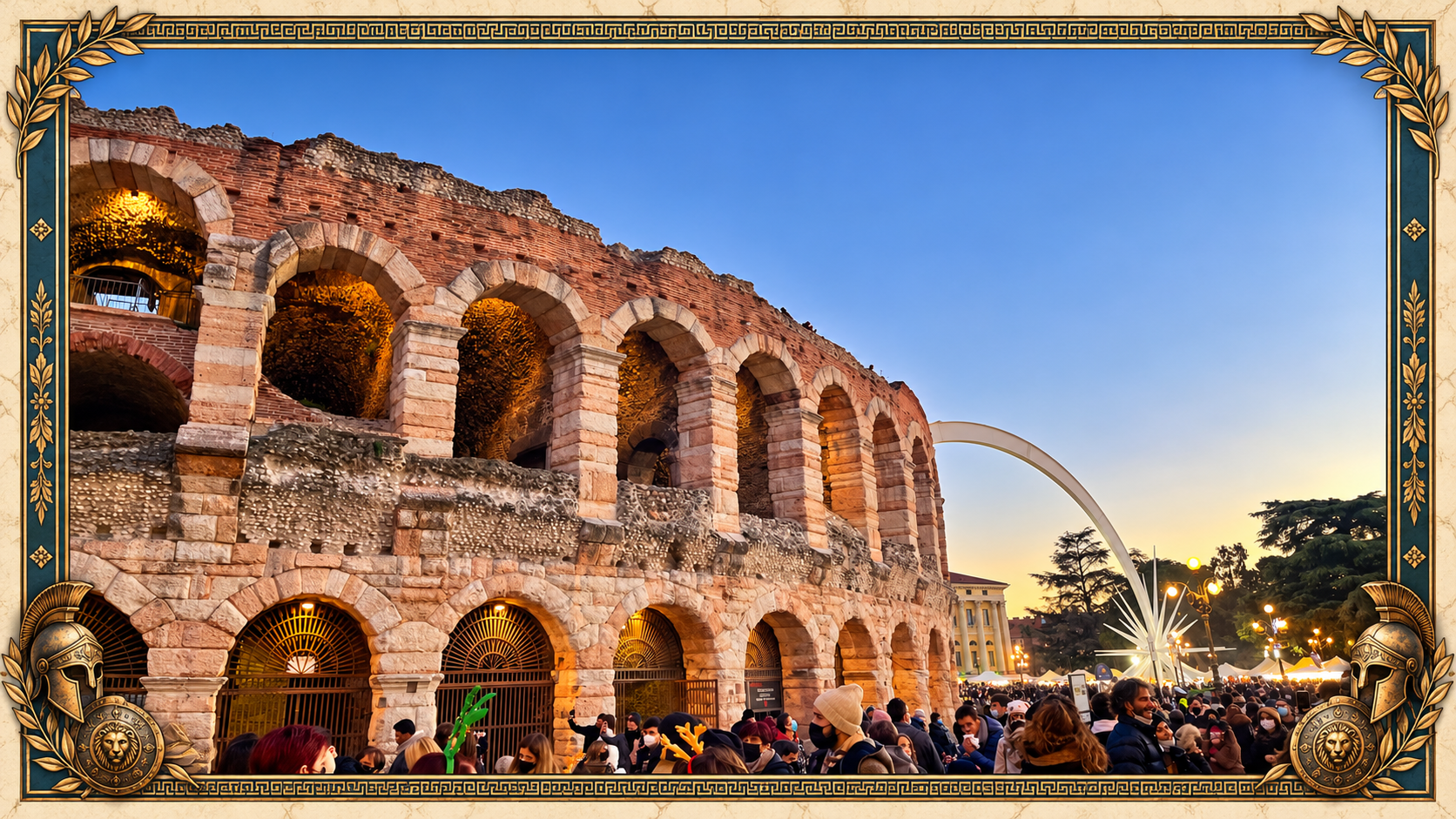
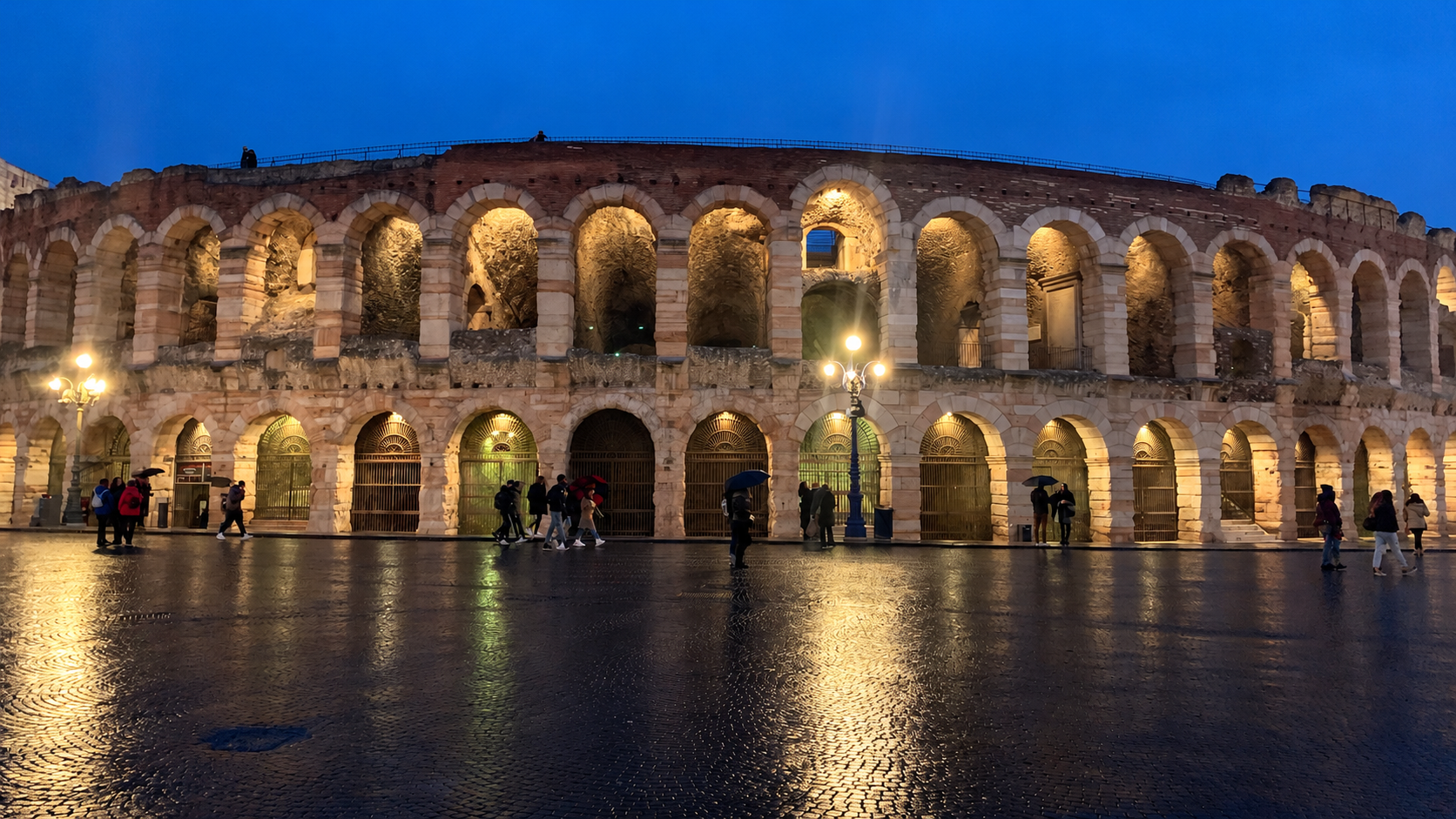
The Romans built the Arena around AD 30, an amphitheater that once held some 30,000 spectators for gladiator games. It survived the barbarian invasions and the great earthquake of 1117, and today it is one of the best-preserved Roman amphitheaters in the world. Since 1913, when Verdi's Aida opened the first festival, it has been one of the most magical opera stages on earth. On a summer night, around 22,000 people sit on the same stone steps the Romans did, holding little candles as the music begins.
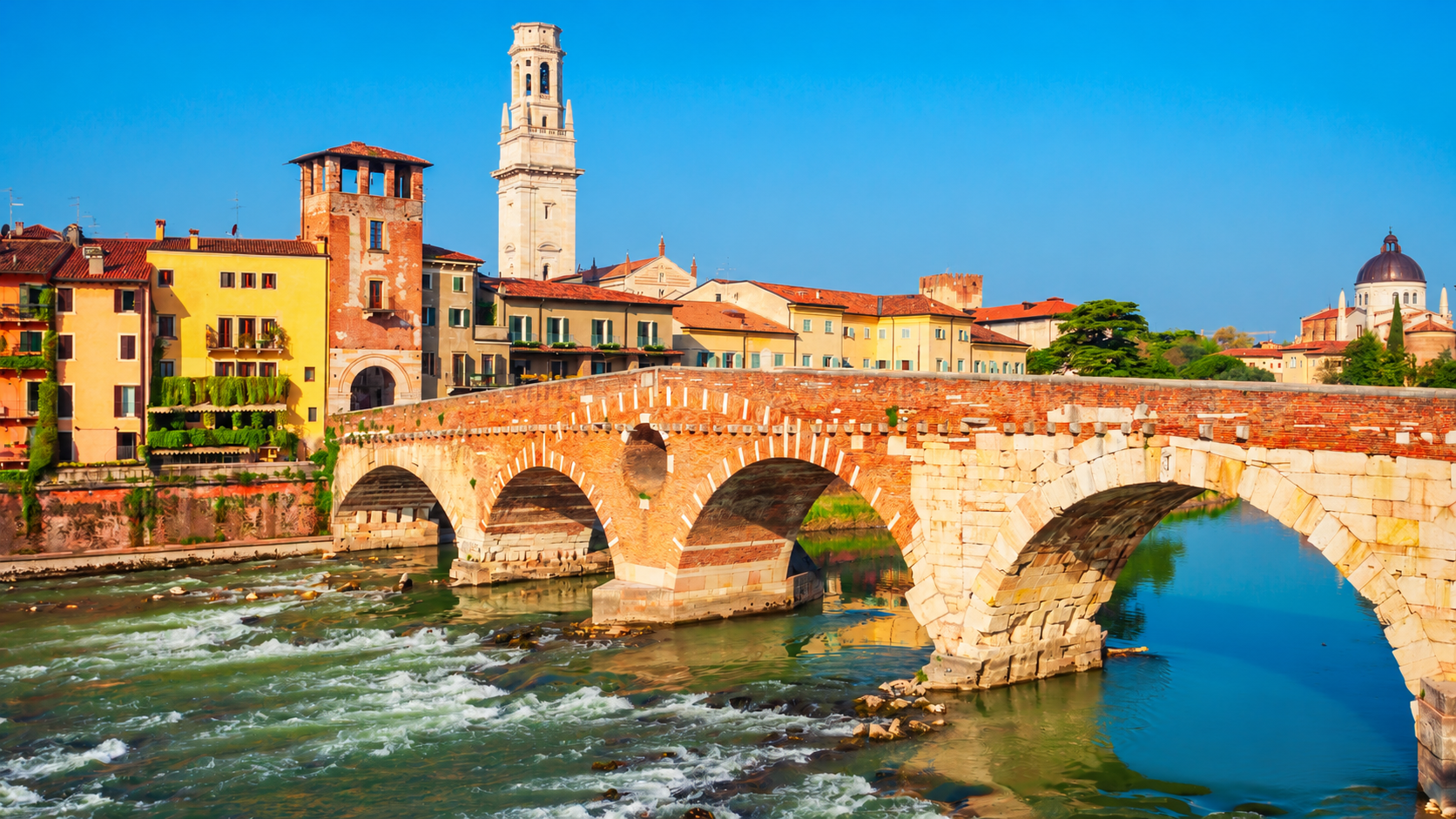
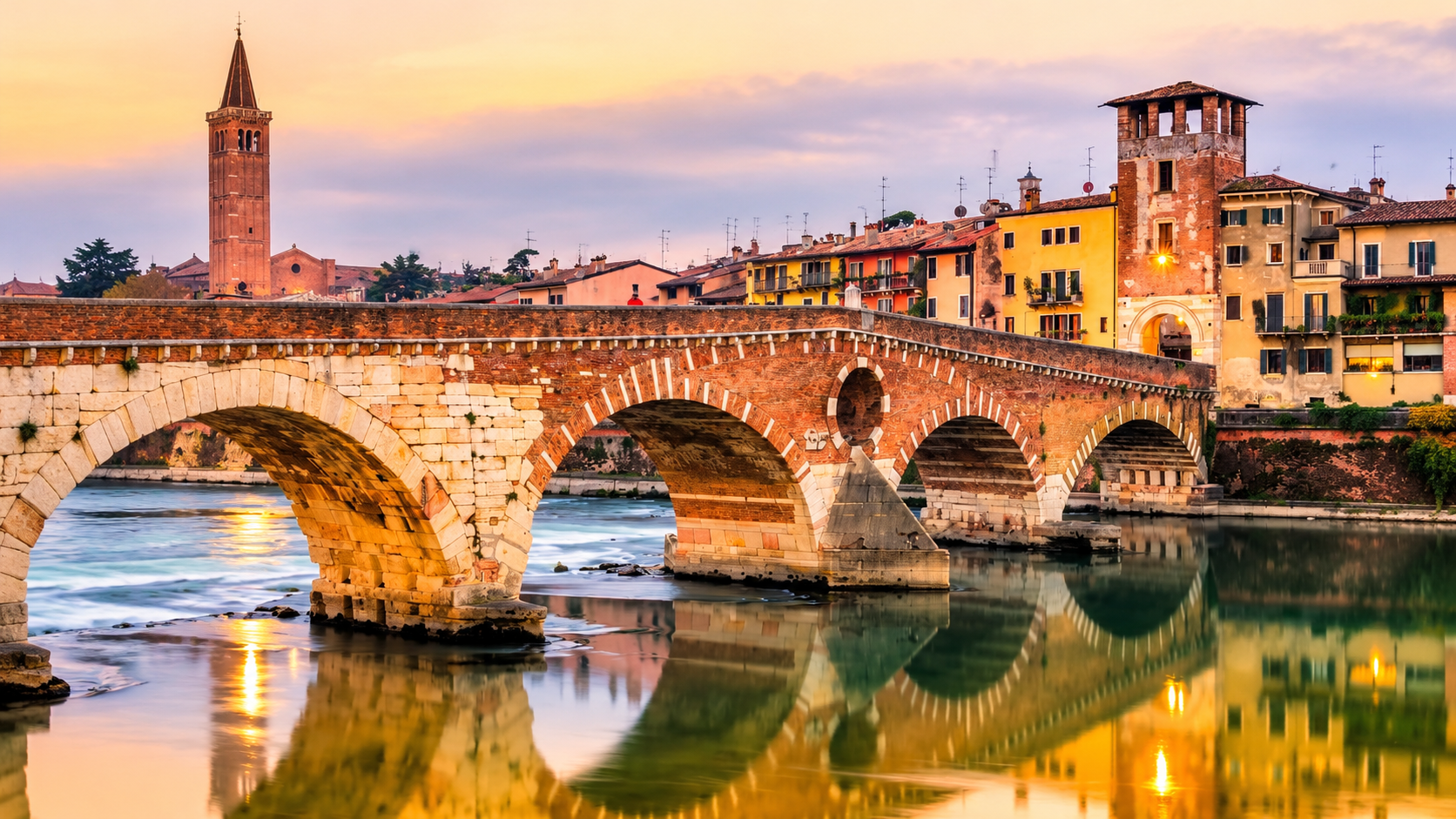
A few minutes' walk away, the Ponte Pietra has crossed the Adige since about 100 BC. In April 1945, retreating German troops blew up four of its five arches. The Veronese refused to lose it. They pulled the original stones from the river, one by one, and rebuilt the bridge by 1957. Stand in the middle at sunset, and you are standing on that act of love.
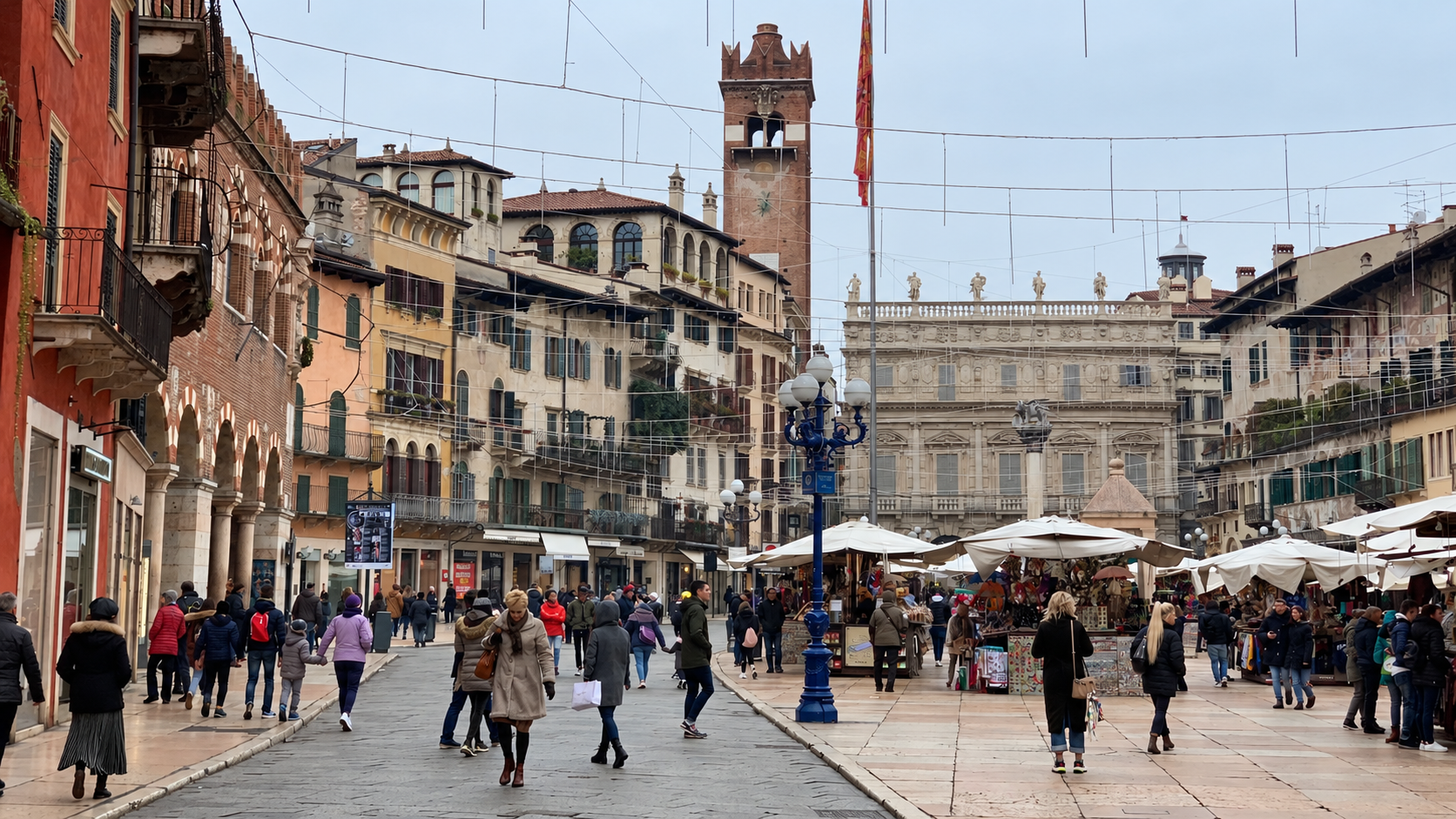
In the Middle Ages, the city belonged to the Scaligeri, the della Scala family, whose name means "of the ladder." You'll spot their ladder emblem carved into walls and gates all over town, and their extraordinary Gothic tombs still stand beside the church of Santa Maria Antica. Piazza delle Erbe, once the Roman forum, is still the city's living room, with market stalls in the morning and aperitivo tables by evening.
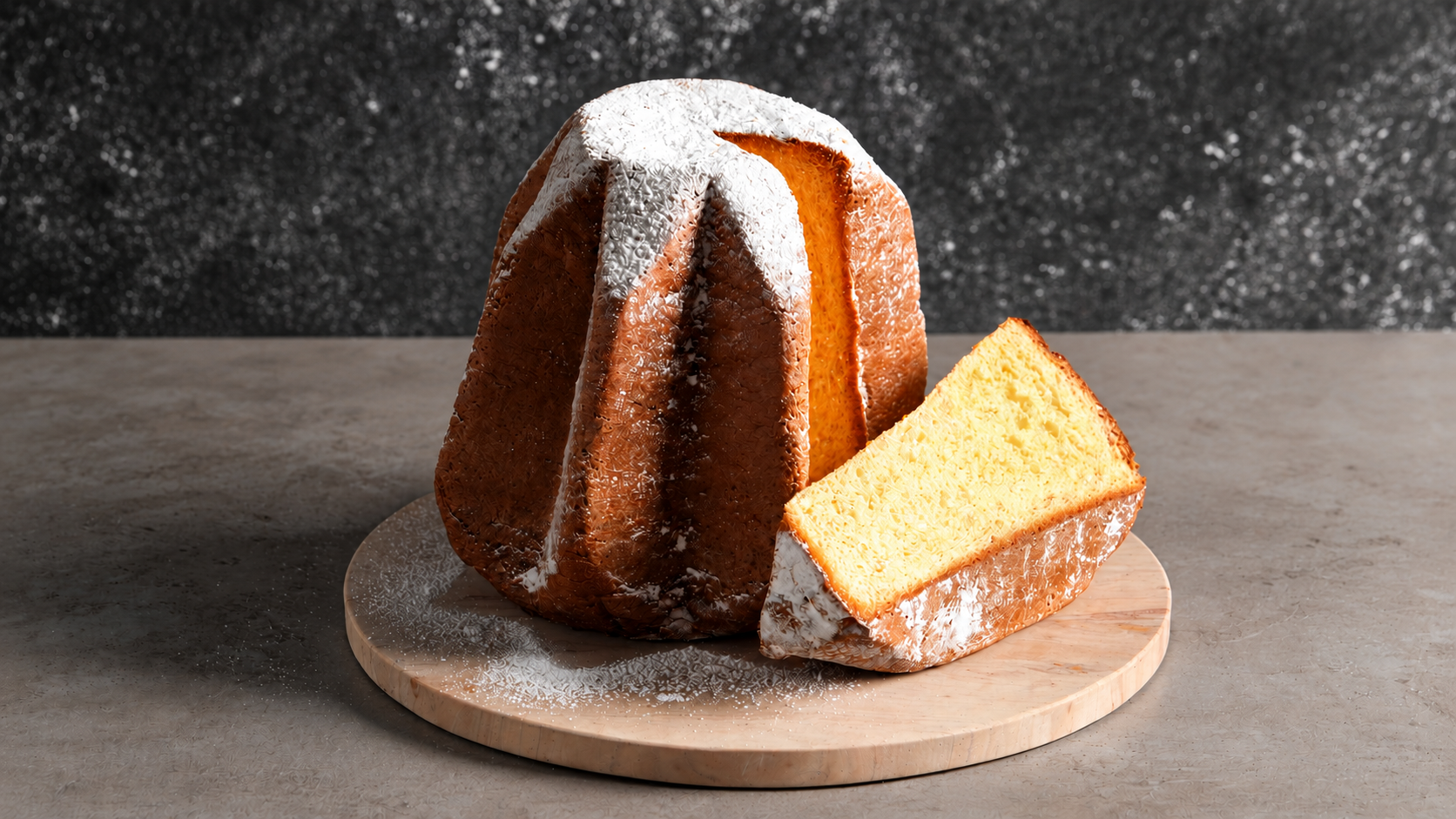
And because I am a pastry chef, I have to tell you this: Verona gave Italy its pandoro. The golden, star-shaped Christmas cake was perfected here, and Veronese pastry chef Domenico Melegatti patented his recipe in 1894. The next time you shake powdered sugar over a pandoro at Christmas, think of Verona.
The story behind the story
Here is something most visitors never learn: Romeo and Juliet were Italian long before they were English.
The earliest known version, published in 1476, is set in Siena and follows two lovers named Mariotto and Gianozza. Around 1530, a writer from nearby Vicenza, Luigi da Porto, moved the story to Verona. He gave the lovers the names we know, Romeo and Giulietta, and placed them between two feuding families, the Montecchi and the Capuleti. Matteo Bandello retold it in 1554, an English poet named Arthur Brooke turned it into a long poem in 1562, and a few decades later Shakespeare took Brooke's poem and made it immortal.
When you walk these streets, you are walking through an Italian story that traveled to London and came home famous.
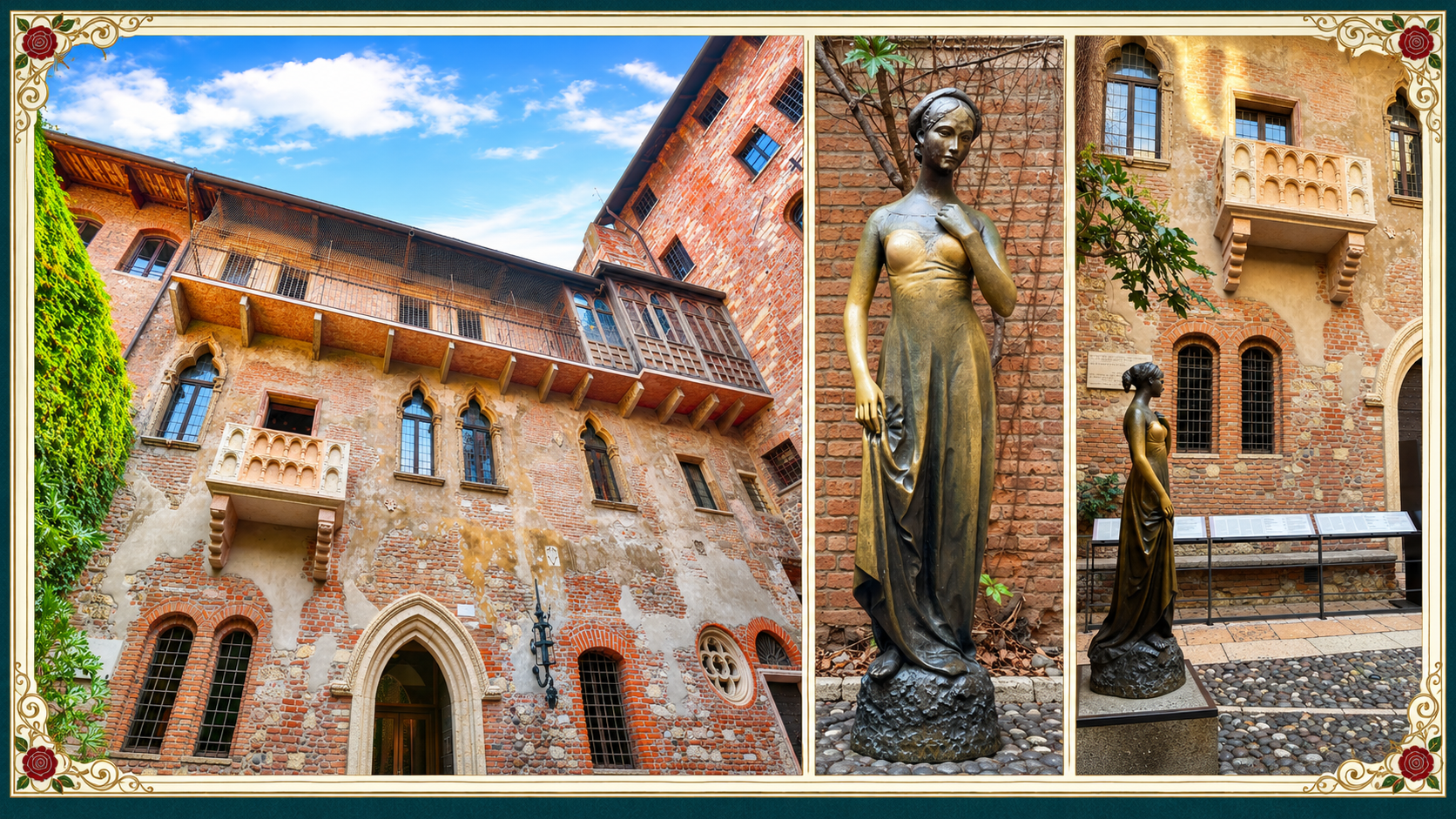
Then there is Juliet's House, the Casa di Giulietta, on Via Cappello. It is a real 13th-century house that belonged to the Cappello family, whose name sounded close enough to Capulet for legend to do the rest. Their coat of arms is still carved into the courtyard arch. The house was restored in the 1930s, when it took on its romantic medieval look, and the famous balcony is widely believed to be a later addition. Does that matter? Not to the lovers who leave notes on its walls, or to anyone who has stood in that courtyard and looked up. Tradition says touching Juliet's statue brings luck in love. I'll let you decide.
Summer 2027: the lovers return to the Arena
Next summer, for the first time since 1993, a full-length ballet returns to the Arena di Verona. Fondazione Arena di Verona is staging a new production of Prokofiev's Romeo and Juliet for the 2027 Arena Opera Festival, in the very city where Shakespeare set the story.
Think about that for a moment. Prokofiev's music, some of the most heartbreaking ever written for the stage, rising out of a Roman amphitheater on a warm June night, a few streets from Juliet's balcony. I got goosebumps just writing it.
There are only four performances: 18 June, 26 June, 15 July, and 20 August 2027. You can view the official Arena programme for full details.
Introducing Romeo & Juliet: A Verona Love Story
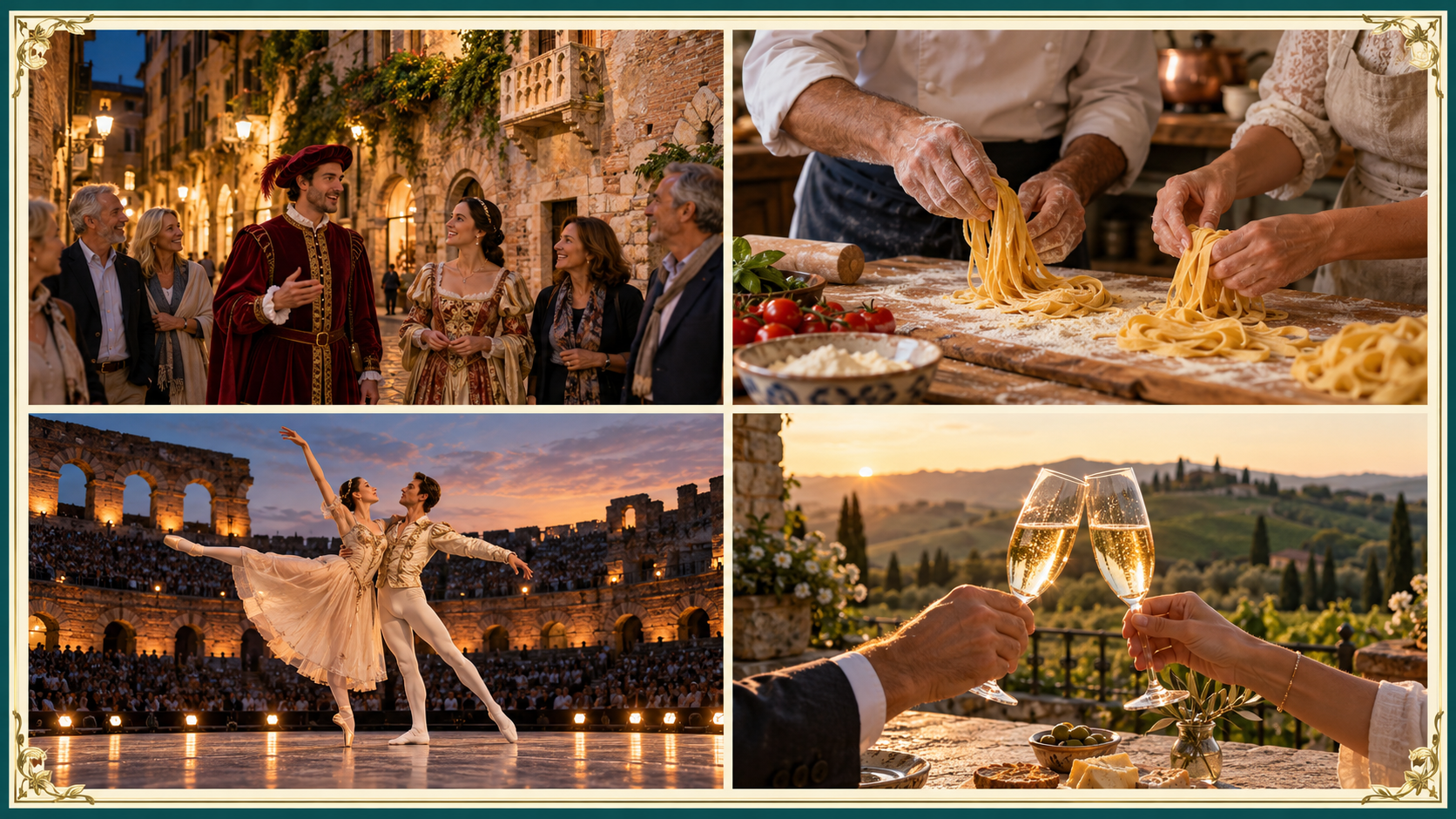
I couldn't let this moment pass without creating something special. So, I've designed a four-day, three-night journey in Verona, built around the ballet evening you choose. Three nights means nothing is rushed. You arrive, you settle in, and you let the city work its magic before the curtain rises.
Your journey begins with a private transfer to your boutique hotel and an evening walking Shakespeare's streets with the actors of Casa Shakespeare, ending on stage in the final scene. Then come Juliet's House and a hands-on cooking class with a local chef, a slow day that builds to an aperitivo near Piazza Bra and Romeo and Juliet under the stars, and a final toast in Franciacorta or along the Prosecco Road. You'll stay in a boutique 4-star hotel or a 5-star retreat with private transfers and my concierge support throughout, all curated around your date, your pace and your tastes, with pricing that begins with a conversation.
Romeo and Juliet only had a few days in Verona. You can have three unhurried nights, a seat beneath the stars, and a toast among the vines at the end. With only four performances, the best hotels and seats will go early. If this journey speaks to you, let's begin with a conversation.
Every journey to Italy is a love story. This one just happens to be the most famous of all.
Andiamo! — Janet
Exquisitely Italy
Ready to experience Italy this way?
Every journey I curate is as personal as the stories I write here. Let's plan yours.